
Tools7 min read13 min video
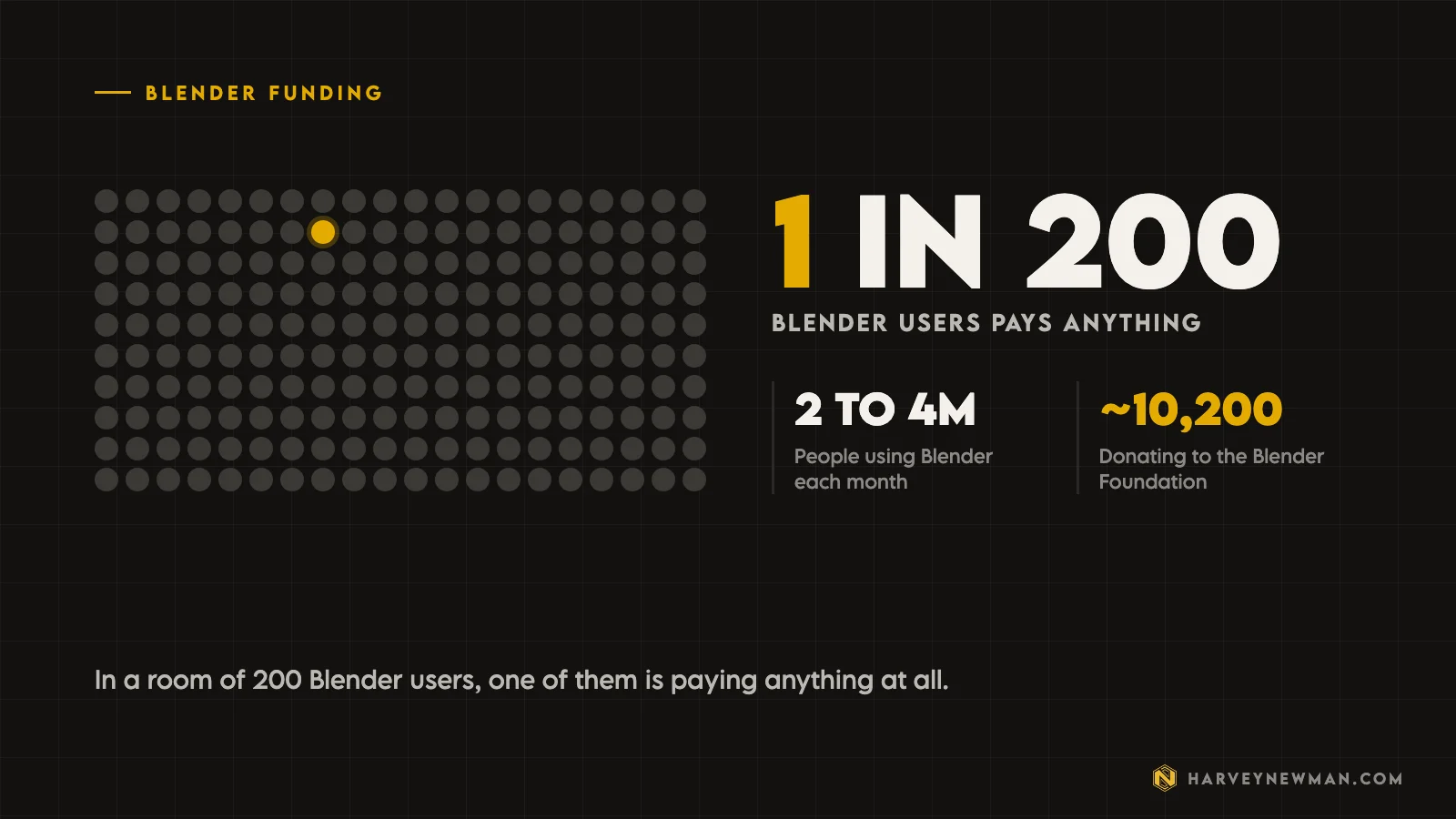
2 to 4 million monthly users. About 10,200 donors.
Blender Funding: Only 1 in 200 Users Pays Anything
Key takeaways
- Blender has 2 to 4 million monthly users and only about 10,200 donors. In a room of 200 Blender users, one is paying anything.
- Autodesk made $7.2 billion last year. Blender brought in around $3 million, and a big part of that came from companies, not individual users.
- When Blender asked its community, 42% said they can't afford to donate. That still leaves 58% who might be able to give a little.
- Blender said that if every active user gave €5, a whole year of development would be funded.
- Subscription fatigue is real, but blanket refusal to pay hurts small developers far more than the big companies.
Free is getting expensive. Not for you, the end user, but for the toolmakers: the developers trying to build the software that makes your life easier. Blender funding is the clearest example I know. Two to four million people use Blender every month, and only about 10,200 of them donate to the Blender Foundation.
If you’re in a room with 200 Blender users, only one of them is paying anything.
This has been on my mind since we launched FrameSide at Animworks (it was still called Keyframe when I recorded the video). Paying for the tools you enjoy is how those tools get better. So here’s what the numbers say, and why I think it matters for every artist using free software.
Subscription fatigue is real
I’m going to start by agreeing with most of you, because you’re probably already thinking about subscription fatigue. I hear about it all the time, and I feel it myself.
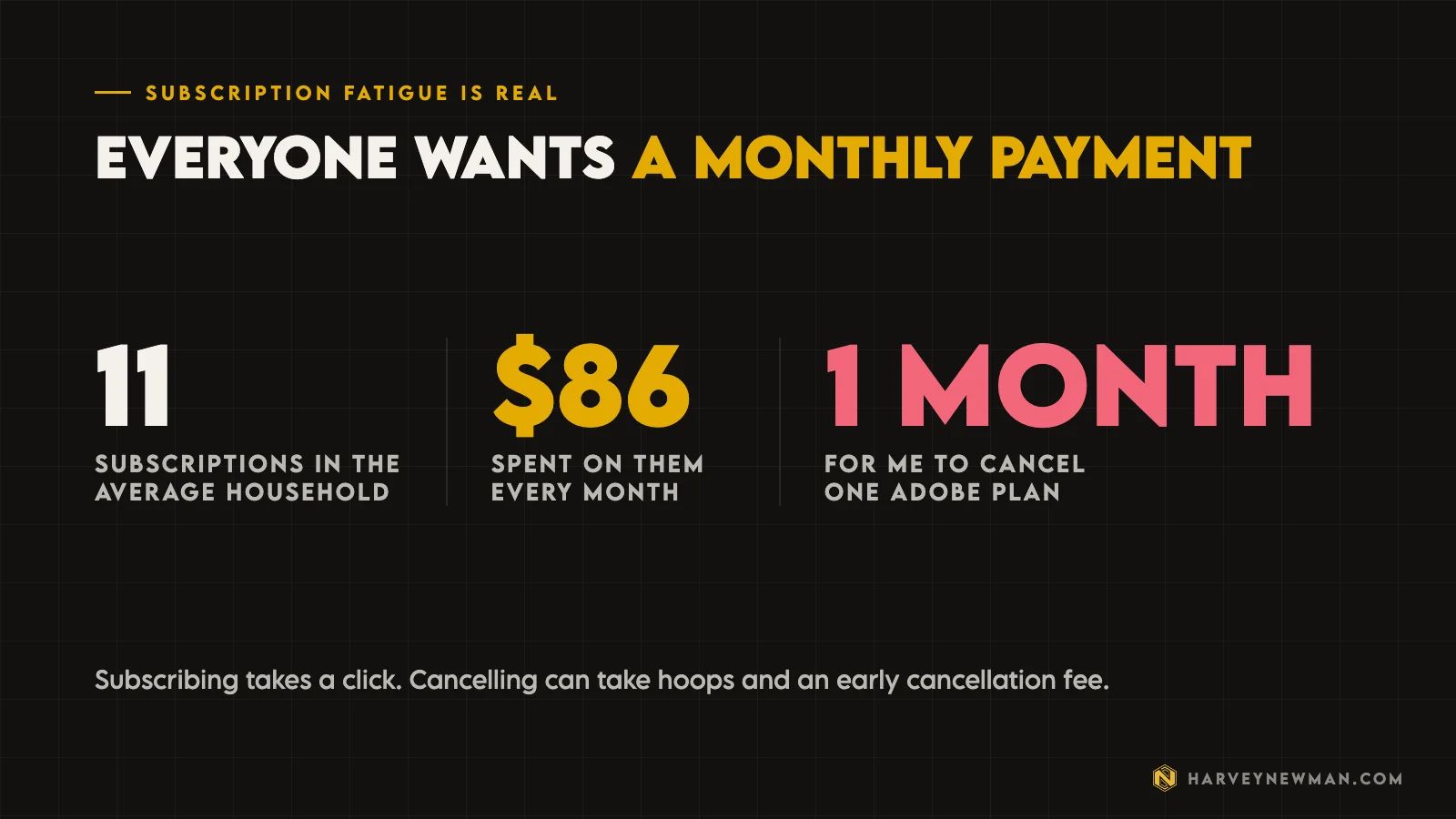
From the research I did for the video, the average household holds about 11 subscriptions and spends about $86 a month on them. It feels like everybody wants a monthly payment from you. I don’t blame anybody who wants to stop paying for anything recurring. It adds up fast, there are plenty of other problems going on, and you don’t want another subscription. I completely understand.
Why is everyone cancelling Adobe?
Some of the big subscription companies aren’t seen in a positive light, and Adobe is the obvious one. Adobe was sued by the US government, in a case brought on behalf of the FTC, over how hard it made cancelling a subscription. It isn’t the only company doing this. Plenty of businesses can see people cancelling more and more, so they put barriers between you and the cancel button.
I should know. I recently cancelled all my Adobe subscriptions. It wasn’t because I didn’t enjoy the products. They’re great. But I tried to cancel just one of them, and it took me over a month to get to the bottom of how to do it.
Going down that rabbit hole, I started to understand why so many people see Adobe as a villain right now. You’re entitled to cancel. Instead you jump through hoops, then find an early cancellation fee you didn’t know about. Subscribing is easy. Cancelling is hard.
Put Adobe next to Netflix, Paramount, HBO and everything else you pay for, and it’s easy to blanket all of them under subscription fatigue and decide you won’t pay for anything. I think that’s where the problem starts. The small businesses are the ones starting to pay the price.
Blender is earning its keep
That’s why I bring up Blender. It has been around since the 1990s, and it was always its founder’s dream that Blender would be free for everybody to use. I think that’s a beautiful thing.
Blender now competes at the top level. Millions of people use it every month. Even AI has access to Blender now and can do things with it. There’s Oscar-winning work made in Blender. For usability and community, I think Blender’s future is bright.
The problem is that the numbers don’t match the accolades.
Blender funding: how many users pay anything?
Two to four million people use Blender every month, and only about 10,200 of them donate to the Blender Foundation. Picture a room with 200 Blender users, everybody at their own PC. Only one of them pays anything, and that’s probably a $5 donation a month for all the work the developers do.
Before this gets too negative: people aren’t simply too cheap to pay for Blender. Blender asked its community, and 42% said they couldn’t afford to pay anything. That makes sense. In some countries even $5 a month is too much.
But that still leaves the other 58%, who might be able to give a little.

Blender vs Maya: a money fight that isn’t fair
Here’s the comparison that got me thinking about all this. Autodesk, the company behind Maya, made $7.2 billion last year. Blender brought in around $3 million.

It’s not even a fair fight, and it decides so much of what Blender can build next compared with what Autodesk can. Autodesk and Adobe are doing well, and they can invest far more in making their tools better.
And much of Blender’s money doesn’t come from the people using it. A big part of it comes from companies that rely on Blender, such as Epic Games, Nvidia, AMD and Netflix. So individual users are contributing even less than you’d think.
When Blender went to its community to keep pace with companies like Autodesk and Adobe, it said that if every active user gave €5, the whole year would be funded. Easily, and quickly.
If $5 for a tool you use every day is too much, that's when free gets expensive.
Harvey Newman
That’s the crux of it. If you can’t afford it, no problem at all. But if you can afford it and you don’t pay just because it’s free, you’re cutting the legs off the software you rely on every day.
If you’ve donated to Blender, I’d love to know what motivated you. And if you don’t pay and you have a good reason, I want to hear that too. This needs a conversation.
If you want to see where Maya is heading with all that budget, I’ve written up the new Sequencer in Maya 2027.
How layoffs make subscription fatigue worse
There’s a compounding problem on top of all this: the state of the industry. Thousands of people have lost their jobs, and it’s getting worse, not better. Getting hired right now is hard. So people find it difficult to pay for software they barely use, and an Adobe or Autodesk subscription gets expensive fast. That’s 100% understandable.
Is the big companies’ monopoly fragile?
As I’ve said in other videos, losing your job and having to do something else can be empowering, especially if you have an entrepreneurial streak. Lots of engineers and software developers are already thinking about the next big thing. What if I built the software I always imagined?
With AI, that’s easier than ever. Instead of a team of engineers, you might only need one. Things are changing fast, which means the monopoly of the big companies is more fragile than it looks.
I talked recently about consolidation in Hollywood: the big studios being absorbed into corporations that want to own everything. I think something similar is happening with software. The companies that held the monopoly for years are consolidating as best they can to keep pace.
But between the job losses, people making ends meet in new ways, and AI making things so much easier to build, I think plenty of people are going to come up with different solutions. We like to think FrameSide is one of them, for animators who want a better video review player.
Vote with your wallet
I think the future is at a fork, and the customer decides. It has always been that way.
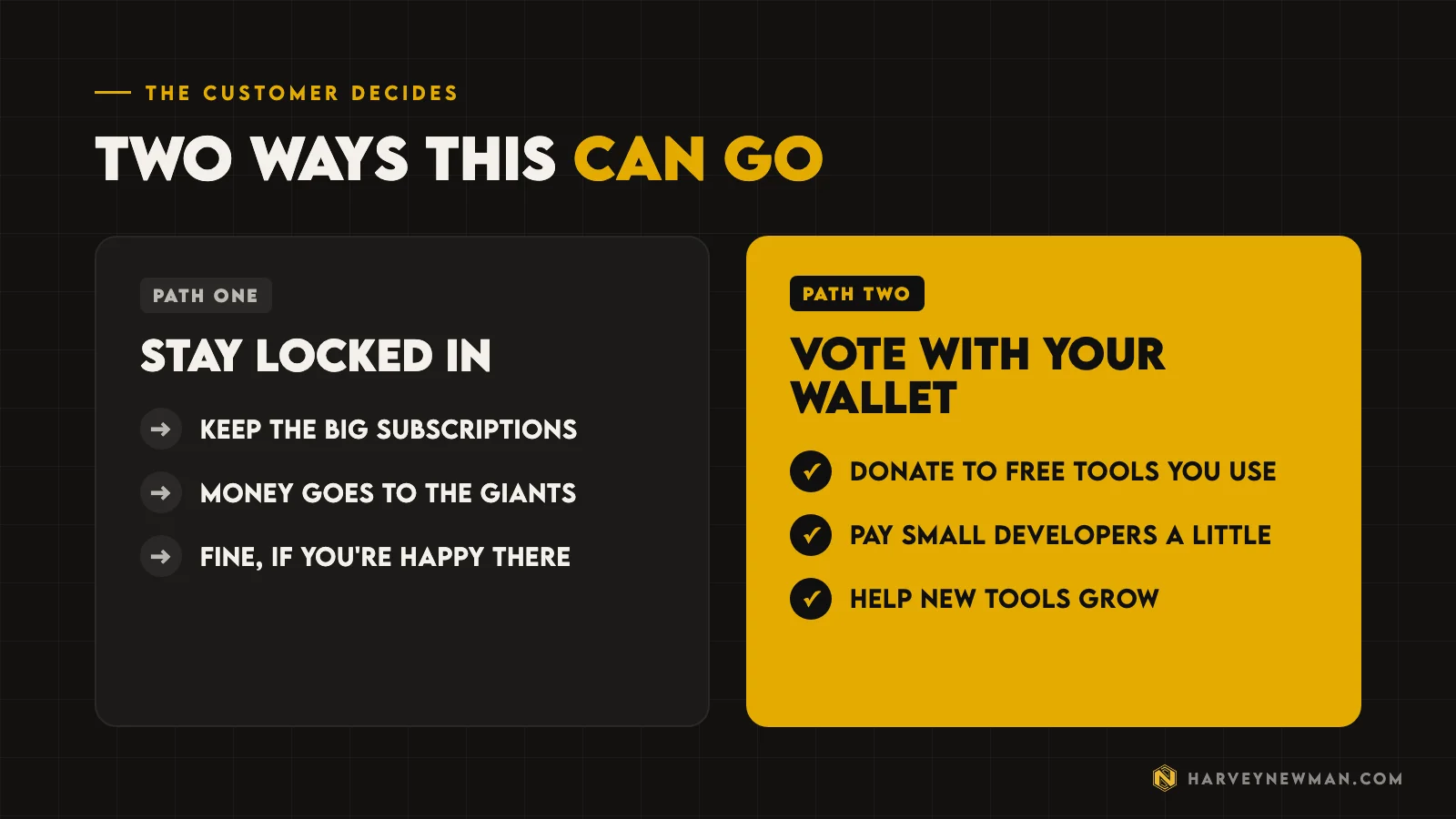
- Stay locked inKeep the big subscriptions and keep paying the big corporations. That's fine if you're happy there. They make great software.
- Vote with your walletPut your money behind the developers who often ask for no subscription, or a small one.
- Support what you loveBlender, Affinity, DaVinci Resolve: excellent tools with free options. They still need their community's support to grow.
I’m not villainising anybody here. But if you love a piece of software, a small subscription, sometimes optional, or a small monthly donation goes a long way.
Why open source 3D software needs its community
This is personal for me. When we put out the first video about our review tool, after months of hard work behind the scenes, the first two comments were “I’m not going to pay for a subscription” and “How much is it? I’m pretty sure it’s expensive and I’m not paying.”
When small developers try to build something fresh that helps the community, and the community says “Nope, not me”, it’s deflating.
It makes you wonder what the point is, because the big corporations have already won. They have the subscriptions and the audience.
If the opposite happened, and people said “I can see where you’re going with this, I want to support you, here’s my donation”, that’s a new way, and maybe a better one. I know the games and animation communities are strong. If they back the small tools, we have places to go. That applies to any free or low-cost software you use right now.
If you really love a piece of software, that little bit goes a long way.
Harvey Newman
I do what I preach
I have a plugin on my Mac called Tuna that does a brilliant job with shortcuts. I got it when it was free, and now it’s paid. I use it every single day, so I’m paying for it, no problem at all. The same goes for big subscriptions like Autodesk.
The one exception is Adobe. I don’t want to go back, purely because of how hard they made it to cancel. That habit of trapping people is part of why so many of us now see subscriptions as evil.
I don’t know exactly what the answer is. But I’d love to hear your ideas for solving subscription fatigue without starving the small developers. Have you donated to Blender, and what pushed you to do it? Come and tell me in the comments on the video.
The video
Watch the full breakdown
Questions people ask
How is Blender funded?
Mostly through the Blender Development Fund, which takes recurring donations from individuals and memberships from companies such as Nvidia, AMD and Netflix. Only a small share of Blender's millions of users donate, so corporate members carry a big part of it.
How many Blender users donate?
About 10,200 people donated out of 2 to 4 million monthly users when I made the video. That works out at roughly one in every 200 users paying anything at all.
Blender vs Maya: which company has more money?
It isn't close. Autodesk, which makes Maya, made $7.2 billion in revenue last year. Blender brought in around $3 million. That gap shapes how fast each tool can grow.
Is Blender really free?
Yes. Blender is free and open source, and that was always the founder's dream. Free to use doesn't mean free to make, though. Developers still need paying, and that money has to come from somewhere.
How much should I donate to Blender?
Whatever you can afford. Blender said that if every active user gave €5, the whole year would be funded. If you can't afford it, that's completely fine. If you can and don't because it's free, that's the problem.
And remember,
there are no shortcuts for animation.
 Stay well, stay safe,Harvey NewmanBook a free call →
 Looking for knowledge?How to Thrive in the Games Industry: The Long GameMy book on building a career in games and keeping it. CRC Press, 246 pages.Get the book →
 Looking for resources?Rigs, courses and mentors on AnimworksFree and paid rigs, courses from working pros, one to one mentoring and mocap packs.Visit anim.works →
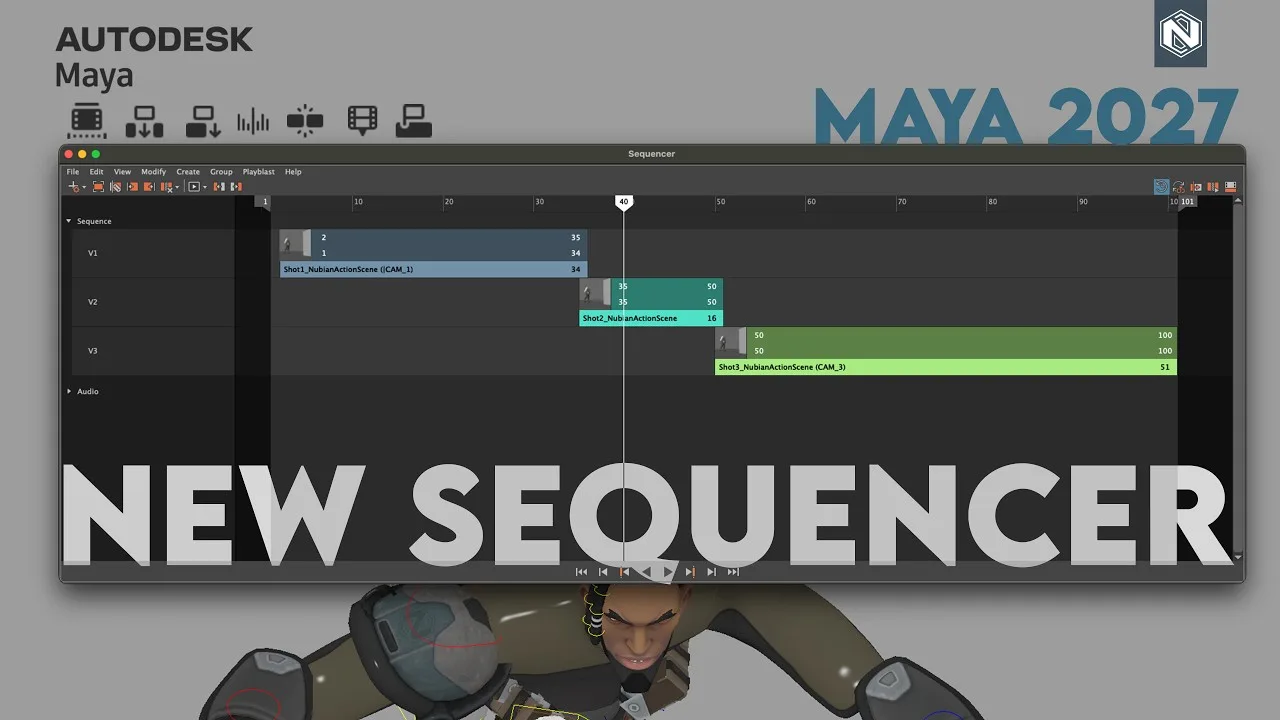 Maya 2027: The Sequencer Update Maya Animation Needed8 May 2026
 Leaving AAA and Going Independent: How I Did It After 20 Years2 Oct 2026
 Autodesk Flow Studio: AI Motion Capture for Game Developers6 Mar 2026
 Where the Game Dev Jobs Went, and How to Get Them18 Sept 2026