
Business10 min read21 min video
20 years in AAA. Three businesses. One YouTube channel.
Leaving AAA and Going Independent: How I Did It After 20 Years
Key takeaways
- For senior developers, the biggest fear of going independent is rarely the money. It's putting all your eggs in one basket.
- Working on one thing all the time is what burns people out. A bad week follows you home because there's nothing else to think about.
- Switching between projects resets you. A bad day at one business gets 40 minutes, then you come back to it with a clear head.
- Three clients who are happy with your work are more stable than one employer, because each of them spreads the word.
- Consistency is everything. New commitments feel impossible for a month or two, then they become normal and you can add more.
Over the past few months, experienced people in this industry have been messaging me. People I respect, some with far more experience than I have. They all ask a version of the same question: how do you go about going independent, starting your own business, and how do you manage everything at once?
This post is for them. If you’ve spent many years in the AAA studios of the world and you’re thinking about leaving AAA to start your own thing, this is how I did it, and what I wish someone had told me.
I’ve been in the industry for over 20 years, including as an animation director in AAA, and I’ve worked for myself for the last seven or eight. Right now that means Proxima, my game studio, plus Animworks, Rekindled and my YouTube channel, all at once.
At a certain age you start thinking about your legacy. Where am I going? Most veterans I talk to are asking the same thing.
The real fear of leaving AAA isn’t the money
You’ve been in a comfortable job. Being at a massive studio, a Blizzard or a Naughty Dog, gives you credibility. Then you leave, and you’re on your own.
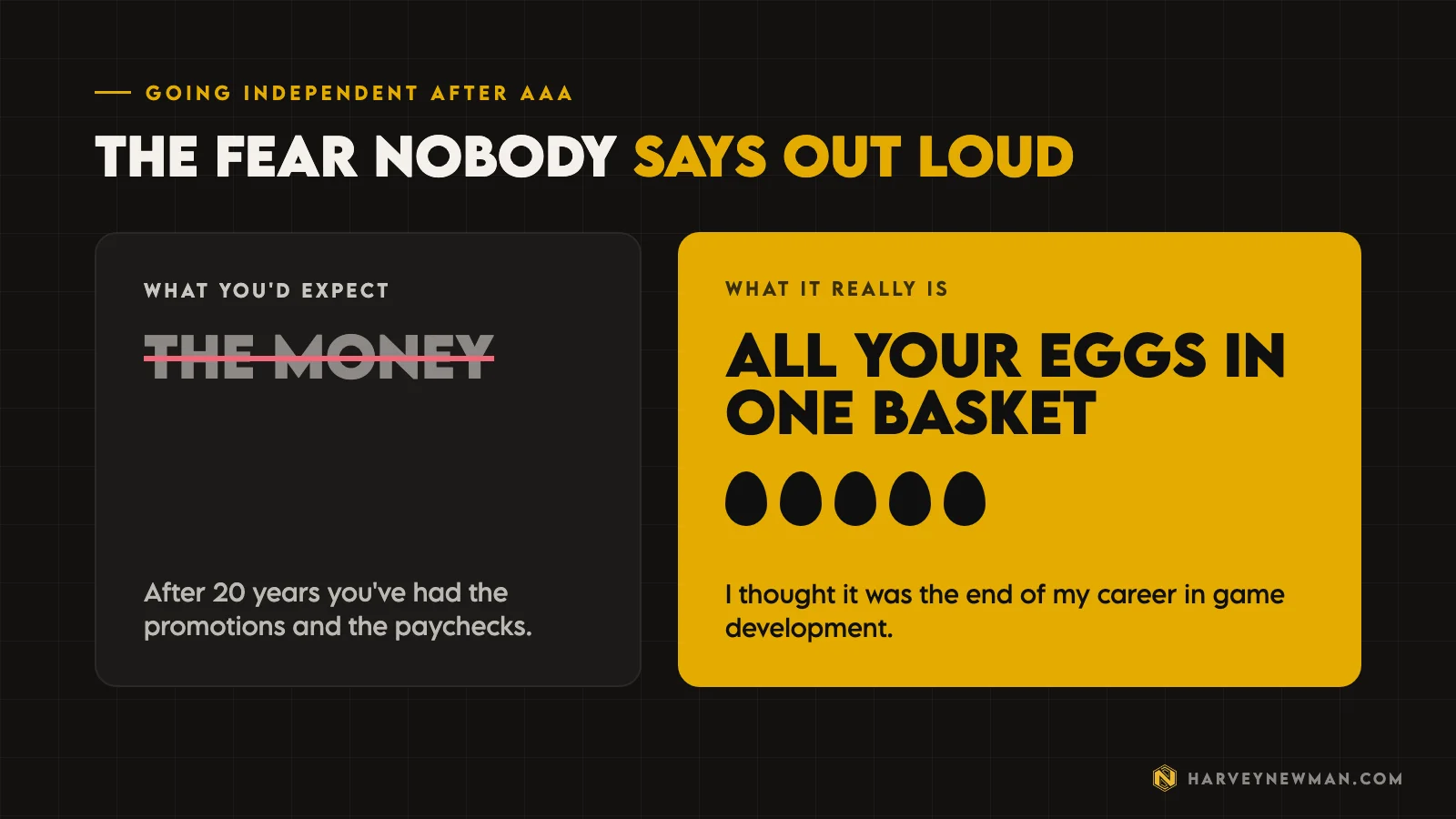
After a certain number of years, I don’t think the fear is about money. You’ve been there. You’ve had the promotions and the paychecks.
The biggest fear about going independent is putting all your eggs in one basket.
I felt that fear too. I’ve never been as scared in my career as when I decided to go independent. I genuinely thought it was the end of my career in game development.
Good days and bad days, with no in between
Something else happens once you make the jump. Some days are great, some days are awful, and there’s nothing in between.
At a big studio, you show up, take care of your team and make decisions with people you know. There’s a security you didn’t know was there. Going independent, it’s gone.
Some weeks your clients love you and everything’s fine. Other weeks everything is on fire, everybody hates you, and all your years of experience seem to count for nothing. You feel small. That has happened to me plenty of times.
Why one focus leads to game dev burnout
When people ask me for advice about going independent, the first thing I tell them is to focus on more than one thing.
In my experience, the biggest cause of burnout, the nights you can’t sleep, the nightmares about work, the awful weeks, is having to focus on one thing all the time.
It spills into your family. A bad meeting, a feature that won’t work, a live game that’s broken: you go home and talk about it with your family all weekend, because it’s the only thing you have to think about.
When you have several things going at once, no single problem gets all your attention, because something else is always asking for it. After seven or eight years of working this way, I live more in the present and less in the past or the future, which is where I used to live. It comes with more stress, and more benefits, and they even out in a good way.
Running an indie game studio alongside everything else
This is where working on several things at once pays off for me.
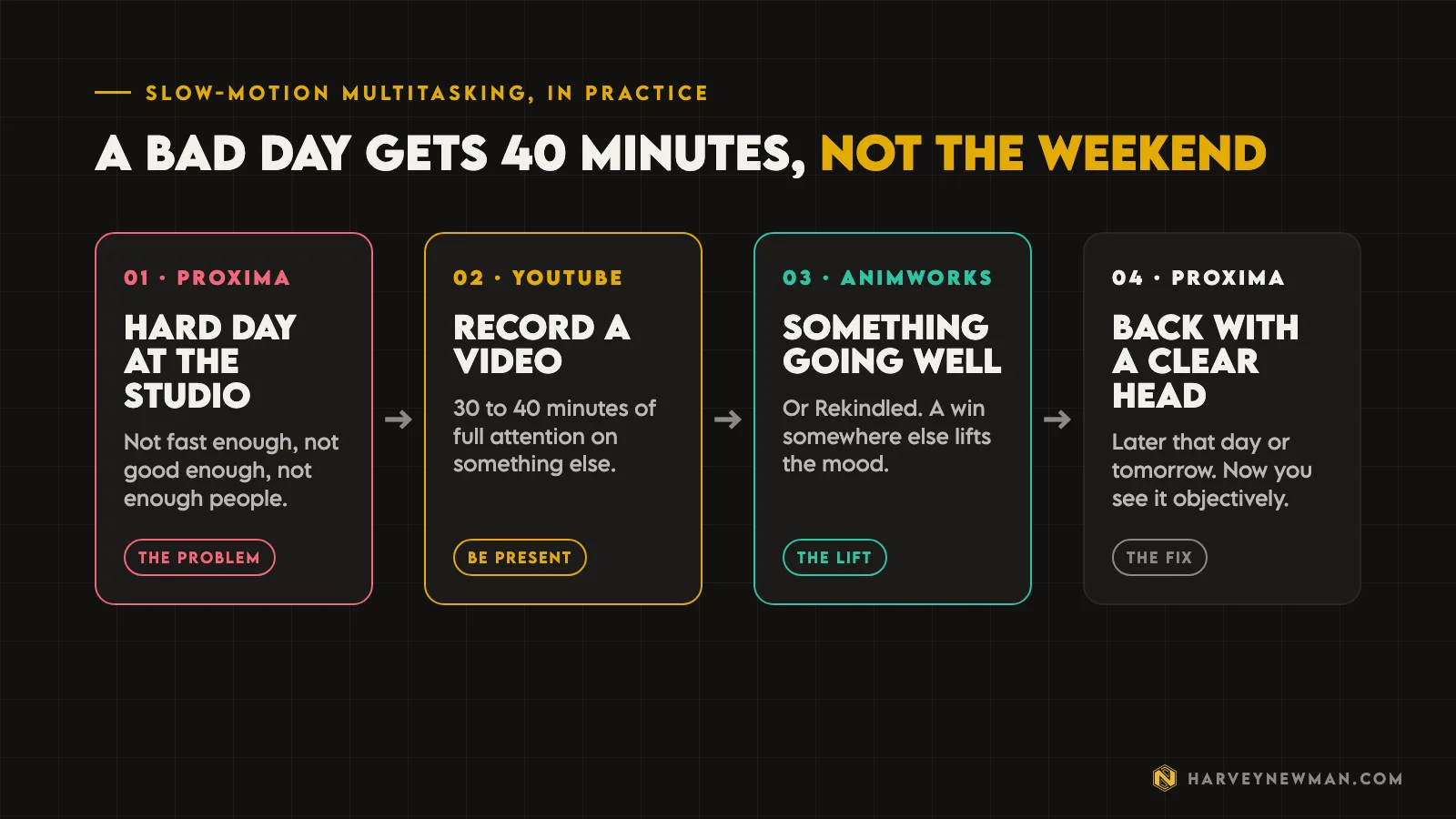
Say I have a hard day at Proxima. We’re not developing fast enough, or well enough, or we don’t have enough people, or someone has a problem. Before, I’d stay with that problem. Now I move over to YouTube.
Recording a video takes me 30 to 40 minutes of full attention. By the end, my mind has let go of the Proxima problem. Then I might move to something at Rekindled or Animworks, and if that’s going well, it lifts me. By the time I go back to Proxima later in the day, or the next day, I feel much better and I can see the problem objectively.
I know it sounds strange: leave one comfortable job for several of your own, with more fires to put out, and feel better. But when people ask how I do so many things, the honest answer is that I do it for my own sake. I don’t want to be so emotionally attached to one thing, for so long, that I break. That happened to me many times.
I’m still invested in all of it. The difference is that when one side isn’t working, I can unplug, plug into another, and come back.
Something is going to go bad and something is going to go good, and those things normally even out.
Harvey Newman
A great thing happens, then a meeting goes horribly wrong. It evens out. It has made me far more productive, and kept my creativity higher than it’s ever been.
The AAA ceiling: “stay in your lane”
When I worked in AAA studios, even as an animation director, near the top of the leadership, I felt like I kept hitting a ceiling.
Studios tend to say: stay in your lane, and do what we tell you. It isn’t always that bad, but often that’s how it works. Sometimes you don’t even know why a decision was made, only that you have to carry it out.
Now the decisions are mine. I ask my team, we talk it through, and I make the call. Before, things just happened to me.
Why three clients are safer than one employer
Don’t depend on one company for your livelihood. Running several companies or projects is how you get there.
It’s harder. You’re working two or three jobs and managing your time closely. I understand now, more than ever, that time is money.
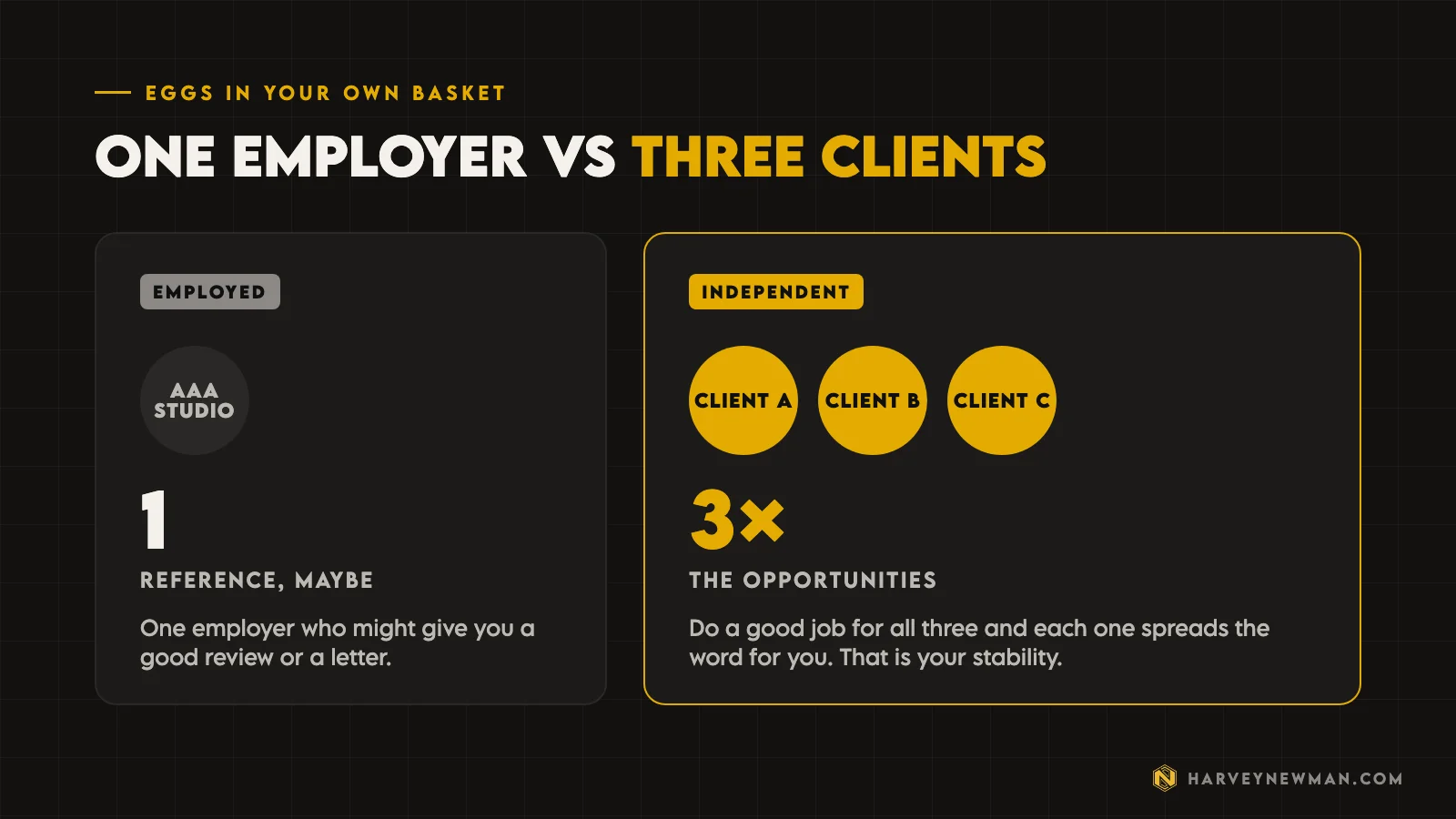
But putting your eggs in your own basket also means spreading your opportunities. Think about it this way:
- One employerBefore, you had one employer who might give you a good review or a reference letter.
- Three clientsDo a great job for three clients, and all three can tell people how good you are.
- More workThat word of mouth brings in more work. Three times the opportunities you had.
Where does creativity come from when you stop animating?
People ask me this often. Do you still animate? Where do you get your creative fix?
I haven’t done hands-on animation for a while, because most of my time goes on managing. But the ideas that come to me now are bigger and broader than they used to be, because working with several companies gives me more experience, faster.
An idea I have at Proxima might turn into something at Animworks, which then comes back to Proxima later, or goes somewhere else entirely. That’s the cross-pollination of ideas.
FrameSide started as a Proxima problem
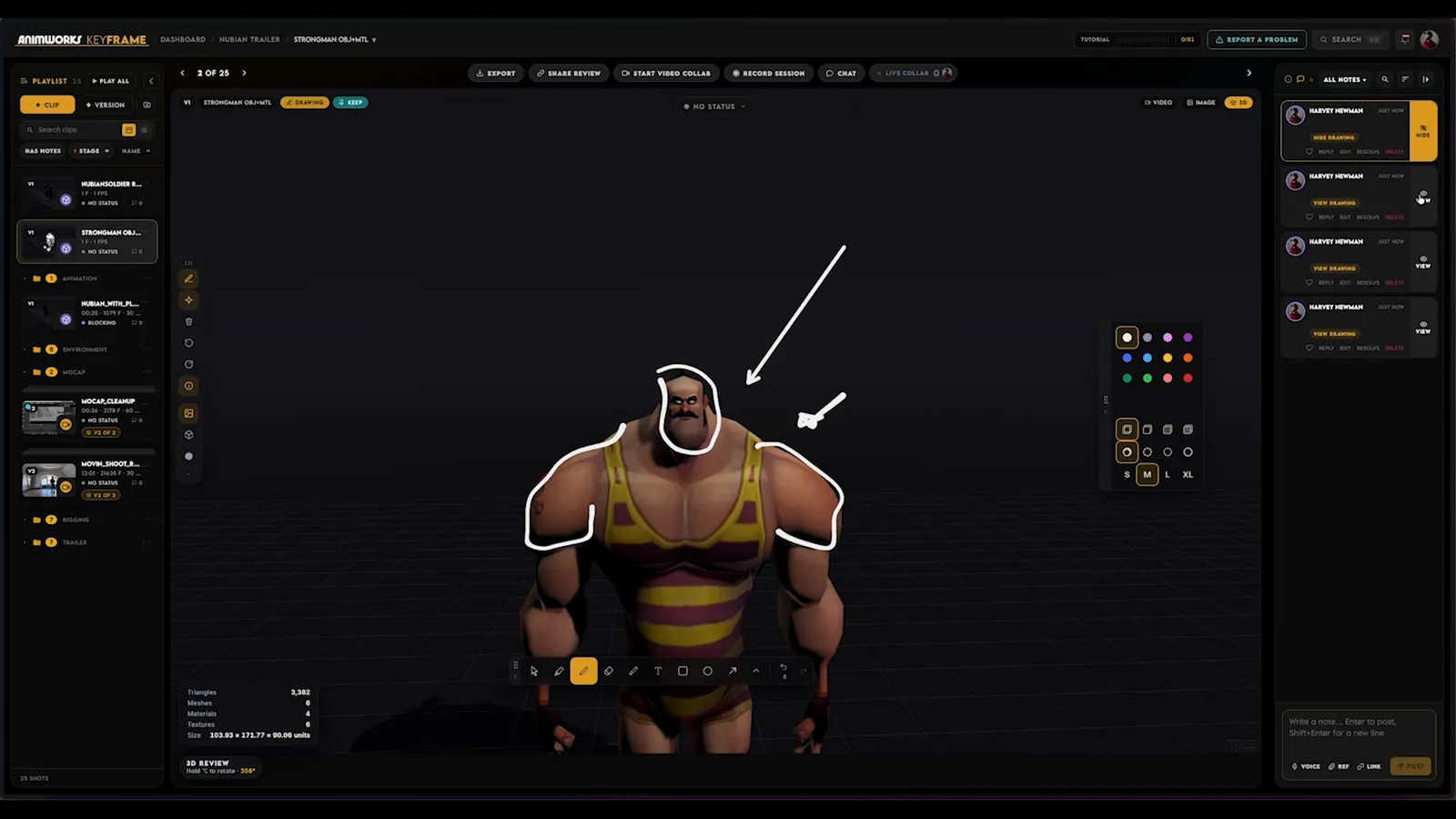
At Proxima I wanted to review animation and give notes as thoroughly as possible, and the review players we had were limiting.
Because we’d been building Animworks, a complex website, the team and I talked it over. We’re all animators, we know what’s needed, so why not build our own player and add the features that were missing? That became FrameSide, an animation review player we now share with others. (In the video I call it Keyframe, its name at the time.) Most importantly for our studio, it looks great, works well and makes us faster.
The more you do, the more tools you have, and the more you see how they connect.
What is slow-motion multitasking?
Everything I’ve described, the cross-pollination, changing projects, working more and feeling more at peace, has a name. The economist and writer Tim Harford calls it slow-motion multitasking.
The idea is that you keep several projects going and move between them over days, weeks and years. Harford points to research on scientists which found that many of the most successful ones kept changing what they worked on, again and again, across their careers. So this isn’t me making things up. It explains much of what I’ve been feeling.
The more I do, the more I want to do. Before, it was: when is the day finished, when’s the weekend, can I have a week off, two weeks, a month? I don’t think in those terms anymore, because if I don’t do the work, the work stops. That’s a weight on my shoulders. But the enjoyment I get day to day is like nothing else.
Spinning plates
Running several businesses at once is not easy. An hour here, an hour there, three hours here, three hours there. Sometimes a task you thought would take an hour takes the whole day and knocks out everything you planned. My editor, Connor, knows this well: I’m often late with a video and he has to edit it in a hurry. Thanks, Connor. You adjust as you go.
Starting your own studio or business? Consistency is everything
If there’s one thing I can give you, it’s this: anything you do is only good if you do it for a certain amount of time. A game takes four or five years. A film might take a year. As an artist, if you commit to something, you have to stick with it.
So before I commit to anything new, like Animworks most recently, I make a new pocket of time by automating, hiring or handing work over. Whatever it is has to be consistent.
I usually stretch myself until I’m close to breaking. Then, over time, it becomes normal, and it’s like you’ve levelled up. Now you can do more.
When we launched the Animworks website, I started doing extra videos on Tuesdays. For about seven years I’d done one video a week, on a Friday. Two a week felt like pulling teeth. In the first month I genuinely thought about giving up. Five or six months later, it feels normal. It’s just something that happens on a Tuesday that I plan for.
Just before you want to give up, that's when things get good.
Harvey Newman
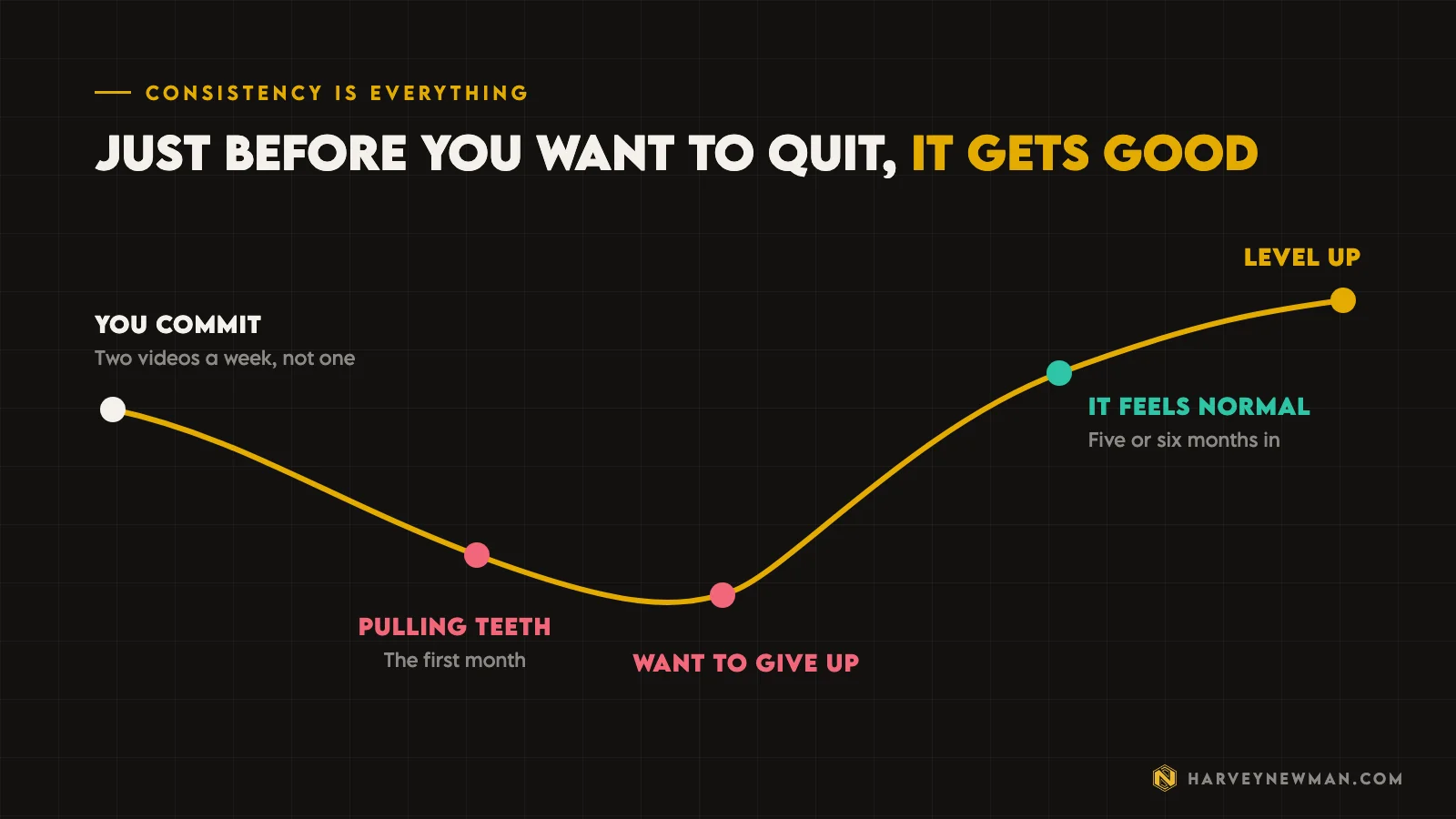
You feel you can’t do it, you do it, it’s hard, you want to quit. Keep going and you see the other side, then you add more on top. If you’re asking me how to start a game studio or any business of your own, that’s most of my answer.
What AI changed about going independent
I started working for myself a few years before AI arrived. Now it’s here, and it has changed how I work.
For productivity, I can do far more with AI than before. Not for creative work, to be clear, but for planning, getting unstuck, asking for advice and finding information, it’s a massive shortcut. It feels like a superpower.
Doing everything I do now would once have meant hiring assistants, training them and working at their pace. With AI I can work at my own speed, and if anything I’m going faster. If you want to start your own business, I don’t think there’s been a better time.
Should you leave AAA and start your own thing?
If you’ve wanted to do this for years and never have: if you don’t try, you won’t know. And if you try, go as hard as you can.
Years of building pipelines, building teams and managing people is your superpower. For years I scanned job ads for skills I matched. Nobody does that for you anymore. You decide you fit your own resume, and go.
It’s going to take years. It’s going to be hard, probably the hardest thing you’ve done.
I’ve had tough jobs at massive AAA studios, and they’re nothing compared with what I do now. But the enjoyment is far greater too, and that makes up for the painful and difficult times.
I’d like to see more veterans in games, film and VFX sharing their experience and becoming entrepreneurs themselves. If more of us help the animation community become independent, I think the industry will be in a far more sustainable place in five or ten years. If that’s where you’re heading, read my thoughts on why the future of game dev is freelance, and on why there are so many game dev jobs open that nobody seems to get.
If you’re an experienced developer weighing up the jump and want advice from someone who has made it, I’m happy to help, wherever you are in the world. Book a free call with me. And if you run a studio that needs a senior animation director on a project, that’s what my consultancy is for.
Are you about to make the jump, or have you already? Come and tell me how it’s going in the comments on the video.
The video
Watch the full breakdown
- 0:00Veterans asking how
- 1:33The fear nobody says
- 2:38Good days, bad days
- 3:24One focus burns you out
- 4:50Switching projects resets me
- 7:36The AAA ceiling
- 8:28Eggs in your own basket
- 9:32Where creativity comes from
- 10:55FrameSide was a Proxima problem
- 12:18Slow-motion multitasking
- 13:28Spinning plates
- 14:13Consistency is everything
- 16:13AI changed the maths
Questions people ask
Should I leave AAA to go independent?
If you've been thinking about it for years, try it. The skills you built in AAA, like building pipelines, building teams and managing people, are the asset. Expect it to take years, to be hard, and to be more enjoyable than the job you left.
What is the biggest fear about going independent?
After many years in AAA it's usually not the money. You've had the promotions and the paychecks. The real fear is putting all your eggs in one basket and losing the stability a big studio gave you.
How do you avoid burnout when you work for yourself?
Don't focus on one thing all the time. Harvey runs several businesses and moves between them, so a problem in one gets a break while he works on another, and he comes back to it more objectively.
What is slow-motion multitasking?
It's a term from the economist and writer Tim Harford for running several projects side by side and moving between them over days, weeks and years, rather than juggling them minute by minute. He points to research showing that many highly successful scientists kept changing topics throughout their careers.
Does AI help when you start your own business?
For productivity, yes. Harvey uses it for planning, getting unstuck and asking for advice, not for creative work. Things he would once have needed assistants for, he can now do at his own speed.
And remember,
there are no shortcuts for animation.
 Stay well, stay safe,Harvey NewmanBook a free call →
 Looking for knowledge?How to Thrive in the Games Industry: The Long GameMy book on building a career in games and keeping it. CRC Press, 246 pages.Get the book →
 Looking for resources?Rigs, courses and mentors on AnimworksFree and paid rigs, courses from working pros, one to one mentoring and mocap packs.Visit anim.works →
 Freelance Animator or Game Developer? How to Adapt to the Co-Dev Future20 Mar 2026
 Where the Game Dev Jobs Went, and How to Get Them18 Sept 2026
 The Reality of Being an Animator in 2026: How an Animation Career Has Changed16 Oct 2026
 What Is Animation Consultancy? What an Animation Consultant Does for Your Studio9 Oct 2024