
Careers8 min read15 min video
Six things I said in 2019. Four still hold.
The Reality of Being an Animator in 2026: How an Animation Career Has Changed

Key takeaways
- Of the six things I said about an animation career in 2019, four still hold word for word. Recognition and picking a lane have moved.
- Games lost close to 60,000 jobs in five years, yet the global games workforce grew about 0.6%. The industry redistributed itself.
- Your CV and credits count for far less than what people can see you do in public.
- Fear, more than AI, is holding studios and animators back. Co-dev takes the fear out, which is why studios are using it.
- Taking a job outside the industry is not failure. Keep the passion and keep animating in your spare time.
Nobody who hires me today has read my credits.
If I’d told that to my younger self, seven years ago, he’d have called it career suicide. Back then I was sitting at a small desk in Sweden, working at DICE, recording a video called The Reality of Being an Animator. About 130,000 of you have watched it since. It’s still the most popular video on my channel.
But the reality in it is gone. So this is the 2026 version: what happened to the animation career I described, across games, film and VFX, and the six things I told you in 2019, taken line by line.
Everyone online will tell you this was all because of AI. I’m here to tell you that it isn’t.
The comment that started this
The most liked comment on that 2019 video has nearly 700 likes. It says, more or less, that it’s hard when your parents are afraid an animation career won’t be enough for you to survive.
Seven years later that comment is still getting replies and likes. Lots of people still feel that way. So in a way, this post is my answer to it.
What I believed about an animation career in 2019
In 2019 I’d had a long career as an animator and was working on Star Wars Battlefront II, a massive game. My channel was one of the first where a games developer talked about what games development was.
And I fully believed the way to a successful animation career was to do what I’d done: get into the biggest studio you possibly can, and build your career there.
One employer, one game, one basket.
To be fair to my 2019 self, at that point in time, I was right. So what happened to that idea?
What happened to the animation industry by 2026?
Here are the numbers, quickly, so you can see the scene. Then I’ll get to the part people don’t talk about as much.
Games
- In 2024 the games industry let go of roughly 15,500 people.
- In 2025, nearly 10,000.
- In 2026, nearly 10,000 again by the end of July, with projections of around 14,000 for the full year.
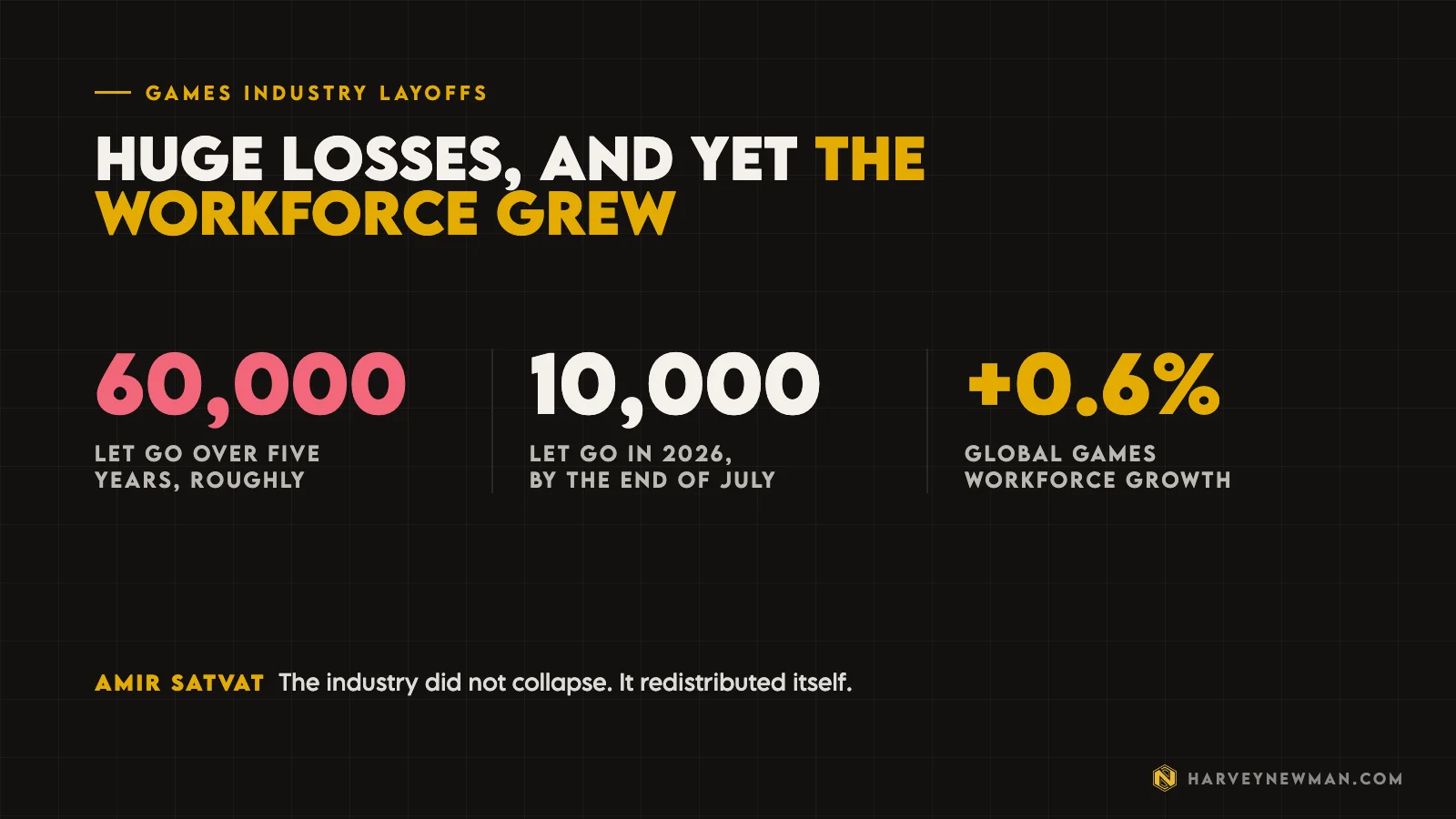
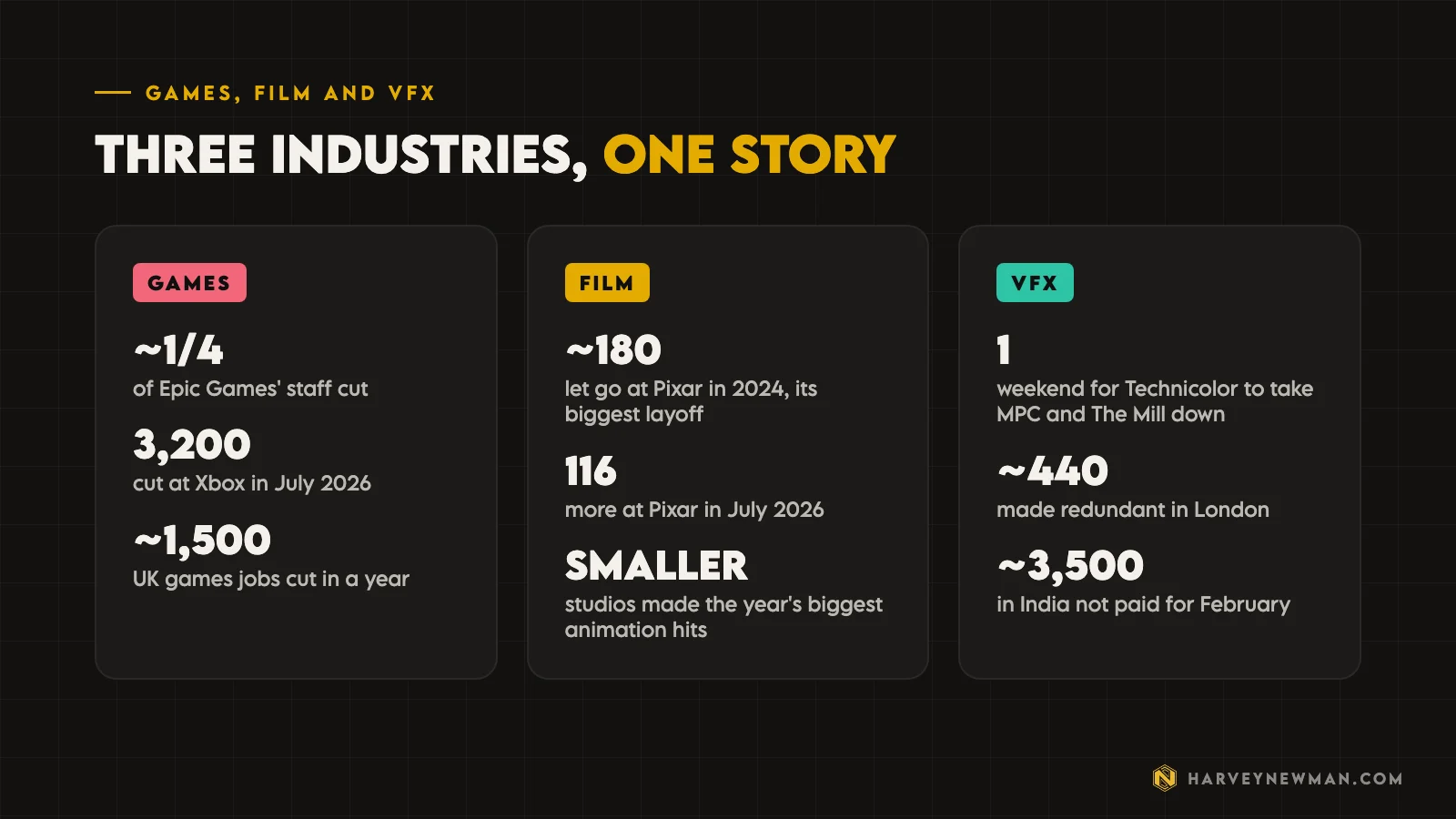
That’s close to 60,000 people let go from one industry over five years. Epic Games cut about a quarter of its staff. Xbox cut around 3,200 people in July. Here in the UK, about 1,500 games jobs went in a single year.
You’d think, with all those people gone, the industry would shrink. It didn’t. The global games workforce grew about 0.6%. North America shrank the most. Amir Satvat, who tracks all of this closely, put it best: the industry did not collapse, it redistributed itself.
You can see it in the hits. Clair Obscur: Expedition 33 came from a small team and sold millions of copies. Another game made by just two people also sold millions.
Film
Film is no better. Pixar let go of close to 180 people in 2024, the biggest layoff in its history, then 116 more animators in July 2026, the same week Toy Story 5 passed 950 million dollars at the box office.
DreamWorks cut its in-house feature animation team heavily and sent much of the work to studios in Canada, the UK and India. In Quebec, one of the places that work went, animation and VFX jobs have since fallen from around 8,000 to about 2,600 in two years.
Meanwhile, the biggest animated films of the year, the ones winning awards, didn’t come from the Pixars and DreamWorks of the world. Think Flow, Ne Zha 2, KPop Demon Hunters and The Amazing Digital Circus. Those big institutions used to take all the Oscars.
VFX
In February 2025, Technicolor went down and took MPC and The Mill with it, in one weekend. About 440 people in London were made redundant. Worse, around 3,500 people in India were not paid for the month of February.
Here’s the part people don’t talk about. We spent years looking up to these institutions as the unit of the industry. I think we forgot the unit was always the people inside them.
The studio was never the unit of this industry. The people were.
Harvey Newman
The six things I said in 2019, line by line
In 2019 I said six things about being an animator:
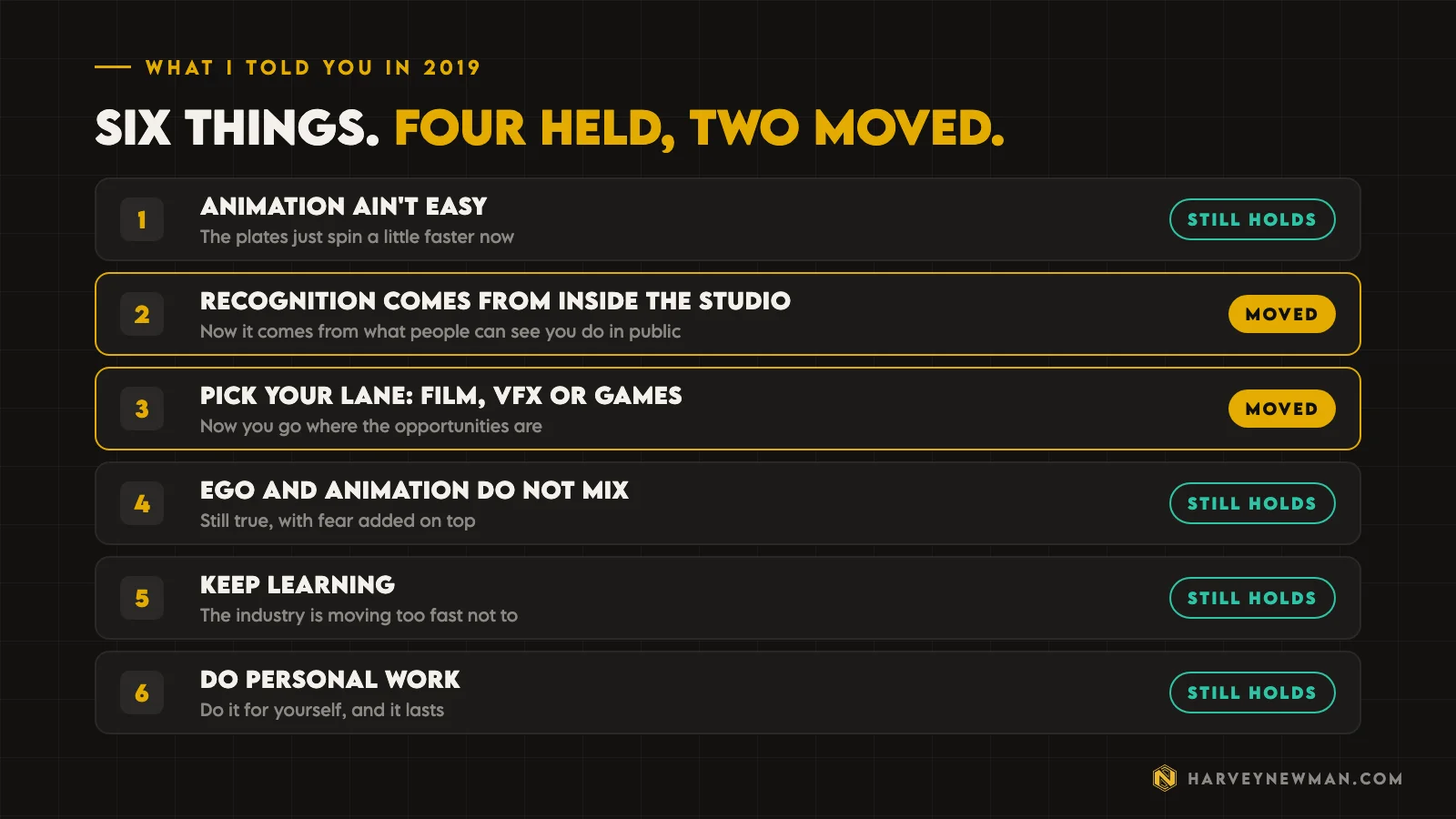
- Animation ain’t easy.
- Recognition comes from inside the studio.
- Decide what kind of animator you want to be: film, VFX or games.
- Ego and animation do not mix.
- Keep learning, because animation is a career that will last your lifetime.
- Do personal work in your spare time, because that’s where you have the most fun and it helps you the most.
Four of those still hold word for word. Two have moved.
Is animation still hard?
Yes. In 2019 I read you a passage from Walt Stanchfield’s Drawn to Life:
“We are performers, but our audience is hidden from us. We are actors, but there is no applause. We are artists, but our works are not framed and hung on walls.”
Seven years on, that’s still the job. You have many spinning plates as an animator. If anything, they’re spinning a little faster now.
Does your CV still matter for animation jobs?
This is the first thing that moved, and it’s the one that changes how you get hired.
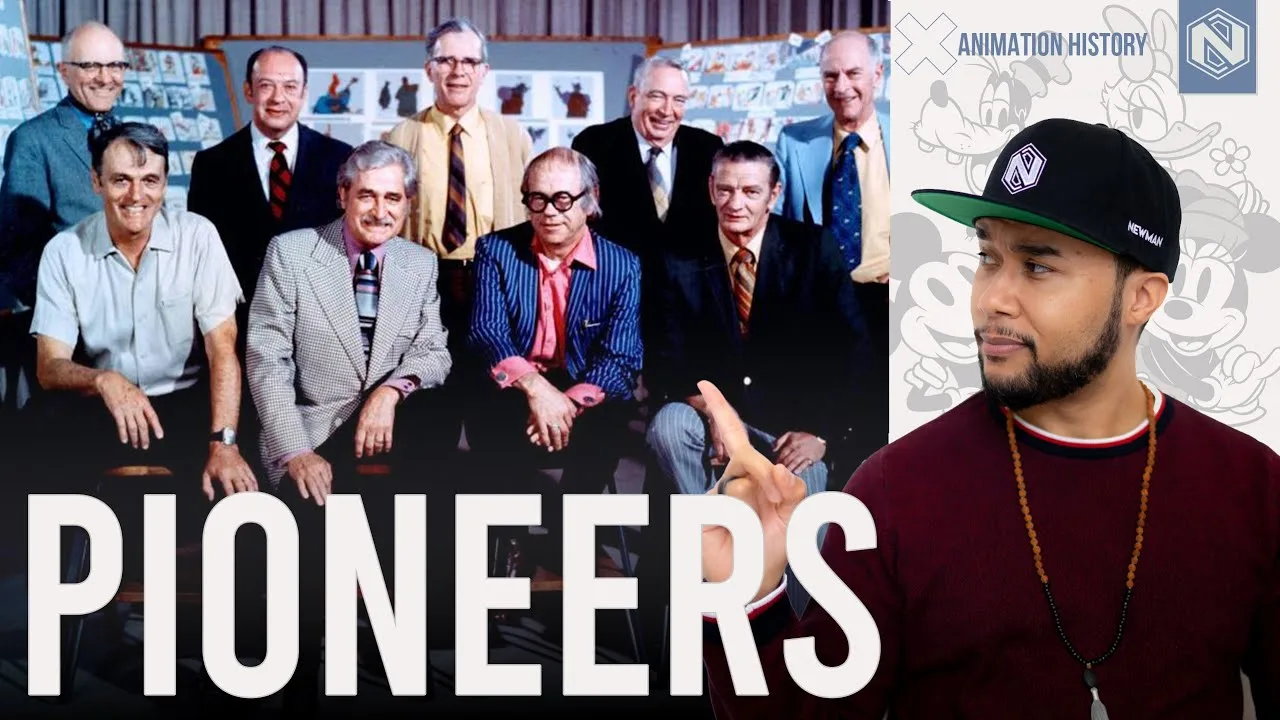
In 2019 I told you about the Nine Old Men and Walt Disney. The public knew Walt Disney. They didn’t know the animator who animated Bambi. I told you to make peace with that, because that’s what being an animator takes. You’re there to do the job.
That’s still true if you work for a studio. NDAs have softened a little, but you’re still under one, and the work belongs to the studio. When you play Spider-Man 2 or Wolverine, you don’t think about who animated it, or who the animation director was. You play for the pleasure. Most people don’t even stay for the credits of a film.
What’s changed is how people find you. In 2026, most of the people who hire me haven’t seen the credits on the games I’ve worked on. They’ve seen this YouTube channel. Maybe they searched for me online. That’s it, and that’s enough. Often we start working together and then they say, “Harvey, you worked on this? And this as well?”
Your CV counts for way less than your social proof.
Harvey Newman

How to become an animator in 2026: be seen
So if you’re working out how to become an animator now, keep this in mind. The old way was: resume, showreel, apply to a bunch of companies, wait for the full-time job.
We’re moving to a world where what you say online, what you do online and the work you show in public matters much more. That’s what will get you the job.
Can you still pick a lane in animation?
This is the second thing that moved.
In 2019 I laid out the challenge of each industry, and that part still holds:
- Film has long schedules and time to polish your shots, but the quality bar is sky high and you have to hit it 100% of the time. The pressure matches it.
- VFX is the hardest of the bunch. It’s fast, and the bar is just as high as film. That’s a hard trade-off to manage.
- Games is the most complex. There’s an engine and lots of technical work, you work with designers, and when someone holds a controller and presses a button to punch, it has to feel good.
What’s changed is the lane itself. Back then, once you picked film, VFX or games, you assumed you’d spend the rest of your career there. Now you don’t get to pick. You have to be ready to move wherever the opportunities are.
Ego, fear and why studios use co-dev
In 2019 I talked about ego. You walk into a big studio thinking you’re a big fish, and you meet people with way more talent and experience who check you on the way in. You check your ego at the door so you can learn from them and absorb everything.
That still holds. But in 2026 there’s fear on top of it.
I believe fear, more than AI, is what’s stopping things from moving right now, for employees and employers alike. It’s in games, film and VFX, and it’s affecting everything.
Because of that uncertainty, studios are hiring co-dev studios. With a co-dev studio, you can bring in an animation team for three months, then say you have enough. Six months later you can say, let’s work together again, with no drama at all. It takes the fear out and gives the studio flexibility.
So take the plunge as an individual animator and look into the co-dev side of things, especially if you haven’t yet. I think this is where things are going, and it’s the most stable side of the industry right now. I wrote more about that shift in where the game dev jobs went, and about working freelance as a game animator.
What still holds from 2019
- Animation isn't easySame job, more spinning plates, and they spin a little faster.
- Check your egoStill true. Now there's fear to deal with on top.
- Keep learningThe industry is moving too fast to stand still.
- Do personal workDo it for yourself, and it lasts whatever happens to studios or AI.
Personal work matters more than ever. Go back to your old self, the one doing it just for the passion. It doesn’t matter what happens with AI or with companies. You’re still there doing it, because it makes you happy. That’s how you make it last.
Is it OK to take a job outside the animation industry?
Yes. This is the thing I most want you to hear.
Everybody has bills to pay. Nobody is going to judge you for working as an accountant when you were an animator before. If you’re anything like me, you’ll be harder on yourself than anyone else is. You’ll feel like a failure, or feel like someone will see you as one. Take the job that pays the bills. Just don’t lose the passion for what you love.
I won’t name names, but there’s an animator at Rekindled who worked for the NHS, the UK’s National Health Service, for 12 years. He wanted to be an animator, and all he did in his spare time was animate, while doing something completely unrelated at work. He joined us at Rekindled a few months ago, and he’s killing it.
If it worked for him after 12 years, it will work for you, as long as you really want it.
So, to that comment from seven years ago: an animation career looks different now, but it’s still there for people who keep going.
Where are you right now: inside a studio, freelancing, or animating around another job? Come and tell me in the comments on the video.
The video
Watch the full breakdown
- 0:00Nobody reads credits
- 1:23The six things, 2019
- 2:12The comment that started this
- 3:45Games: 60,000 gone
- 5:02Film: Pixar and DreamWorks
- 6:00VFX: one weekend
- 6:38The building closed
- 7:11Animation still isn't easy
- 7:44Where recognition went
- 10:23You can't pick a lane
- 11:44Ego, and now fear
- 12:51Why studios use co-dev
- 14:04Taking a job outside
Questions people ask
Is animation a good career in 2026?
It's still a hard job, and the big studios are hiring fewer staff. But the work has redistributed rather than vanished: the games workforce grew slightly overall, and the biggest animation hits of the year didn't come from the old giants. If you really want it and keep at it, it pays off.
Do animation studios still look at your CV?
Less than they used to. Most people who hire Harvey today have never looked at his game credits. They found his public work. Social proof and the work you show online now count for more than a resume.
Should I pick film, VFX or games as an animator?
Know the differences: film has long schedules and very high polish, VFX is fast and high quality at the same time, and games are the most technical. But you can no longer expect to stay in one lane. Be ready to move to wherever the opportunity is.
Is AI the reason animators are losing jobs?
Harvey doesn't think so. He sees fear and uncertainty as the bigger brake on hiring right now, which is why studios lean on co-dev teams they can bring in for a few months at a time.
Is it OK to take a job outside the animation industry?
Yes. Everybody has bills to pay. Take the job that pays them, keep animating in your spare time, and don't lose the passion. One animator at Rekindled worked for the NHS for 12 years before getting his animation job.
And remember,
there are no shortcuts for animation.
 Stay well, stay safe,Harvey NewmanBook a free call →
 Looking for knowledge?How to Thrive in the Games Industry: The Long GameMy book on building a career in games and keeping it. CRC Press, 246 pages.Get the book →
 Looking for resources?Rigs, courses and mentors on AnimworksFree and paid rigs, courses from working pros, one to one mentoring and mocap packs.Visit anim.works →
 Where the Game Dev Jobs Went, and How to Get Them18 Sept 2026
 Freelance Animator or Game Developer? How to Adapt to the Co-Dev Future20 Mar 2026
 Leaving AAA and Going Independent: How I Did It After 20 Years2 Oct 2026
 The 12 Principles of Animation: Where They Really Came From6 Feb 2026