
Game animation7 min read19 min video
5 days. 15 hours. The best of it in one read.
Gameplay Animation Tips from a 5-Day Game Animation Streamathon
Key takeaways
- USD (Universal Scene Description) holds geometry, materials, rigging and animation data in non-destructive layers, so one file can be the source of truth across Maya, Blender and Unreal.
- Freelancing across borders comes down to your network and how you work. A 12-hour time difference isn't a deal breaker.
- Technical animators serve animation and every department around it. Passion is what keeps them going when everything is broken.
- Gameplay animation is often the most valuable animation skill in games, and film animators often struggle because games are a loop around the engine, not a straight line.
- Expect to redo your gameplay animation many times. Get it in the game fast, and share your own work online before it's perfect.
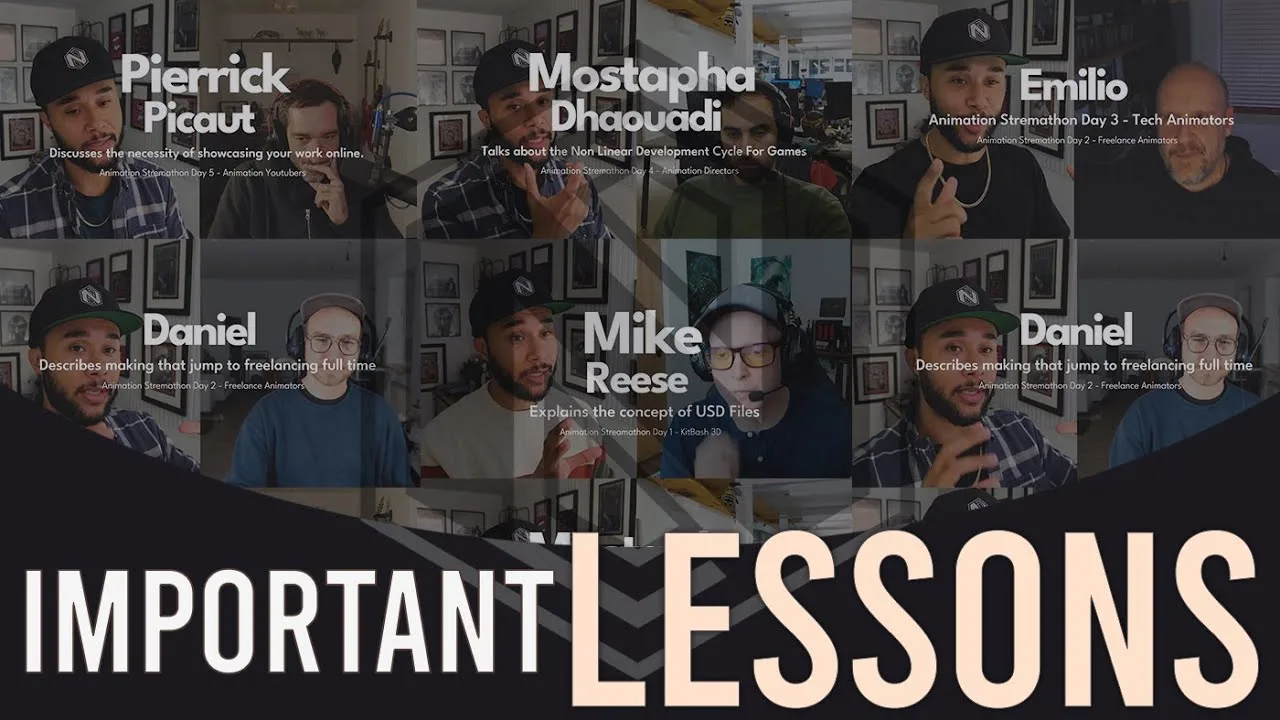
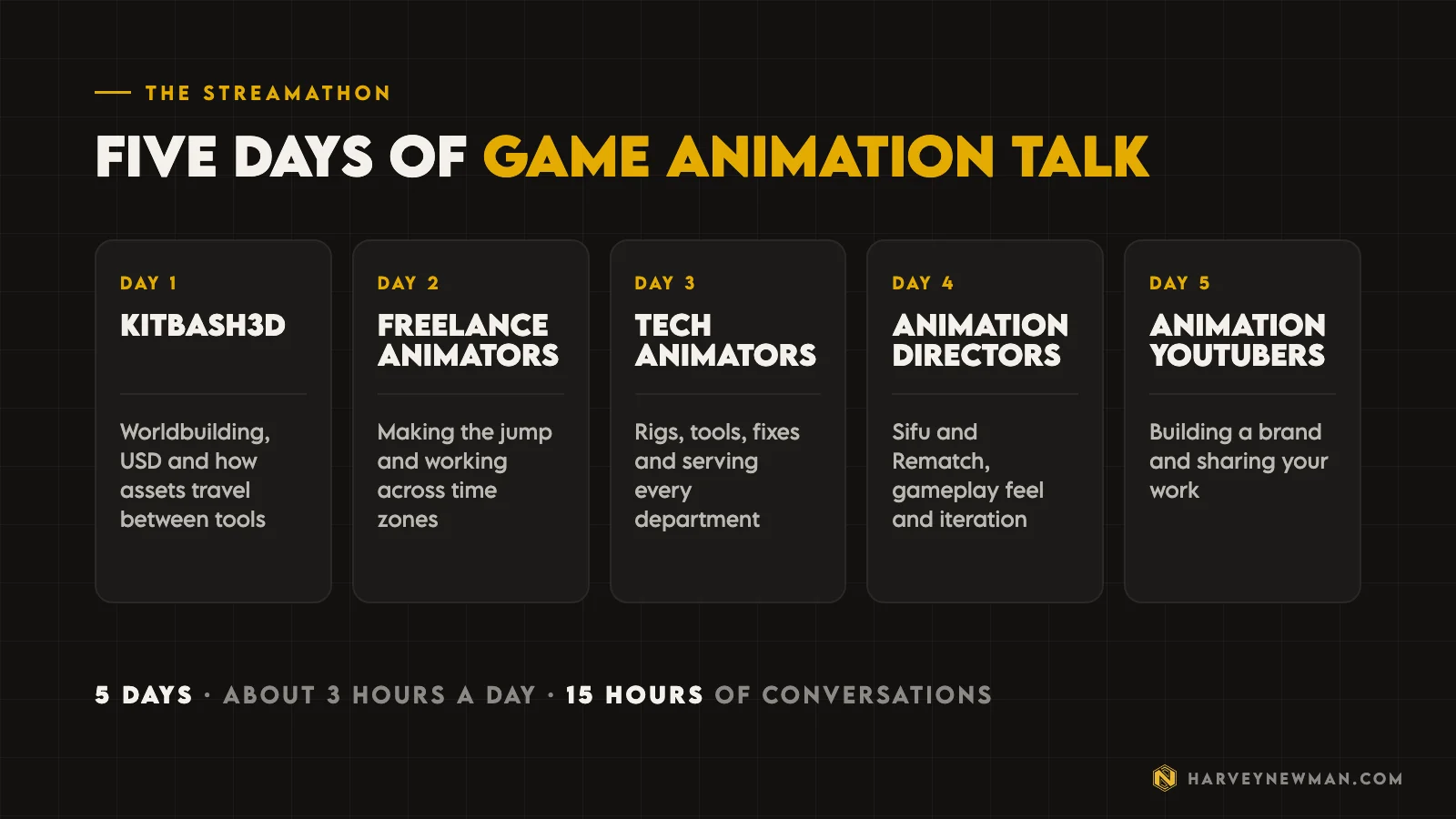
At the end of 2025 I ran a Streamathon: five days of live streams, about three hours each, with some of the most experienced people in game animation, tech animation and game development. That’s 15 hours of conversation.
I know most of you don’t have time to watch all of it. So this is the compressed version: the best gameplay animation lessons and game animation tips from the week, in one place. We cover USD pipelines, the jump to freelancing, life as a technical animator, why gameplay animators matter so much, and how to build a brand in a tough industry.
If you do want the full sessions, they’re all in the Streamathon playlist.
What is USD, and can it carry animation?
Day one was with the team at KitBash3D. I’d always thought of USD as a modelling format. It was Mike Reese who told me you can export animation through USD too, which means it can work across every package. So I asked him to break it down.
USD stands for Universal Scene Description. It was made by Pixar, and it’s a powerful file format. Mike explained that KitBash3D has worked with Pixar and with NVIDIA, who make Omniverse, and that they’ve been USD forward from early on, alongside people like Houdini and Pixar.
Here’s what makes it different:
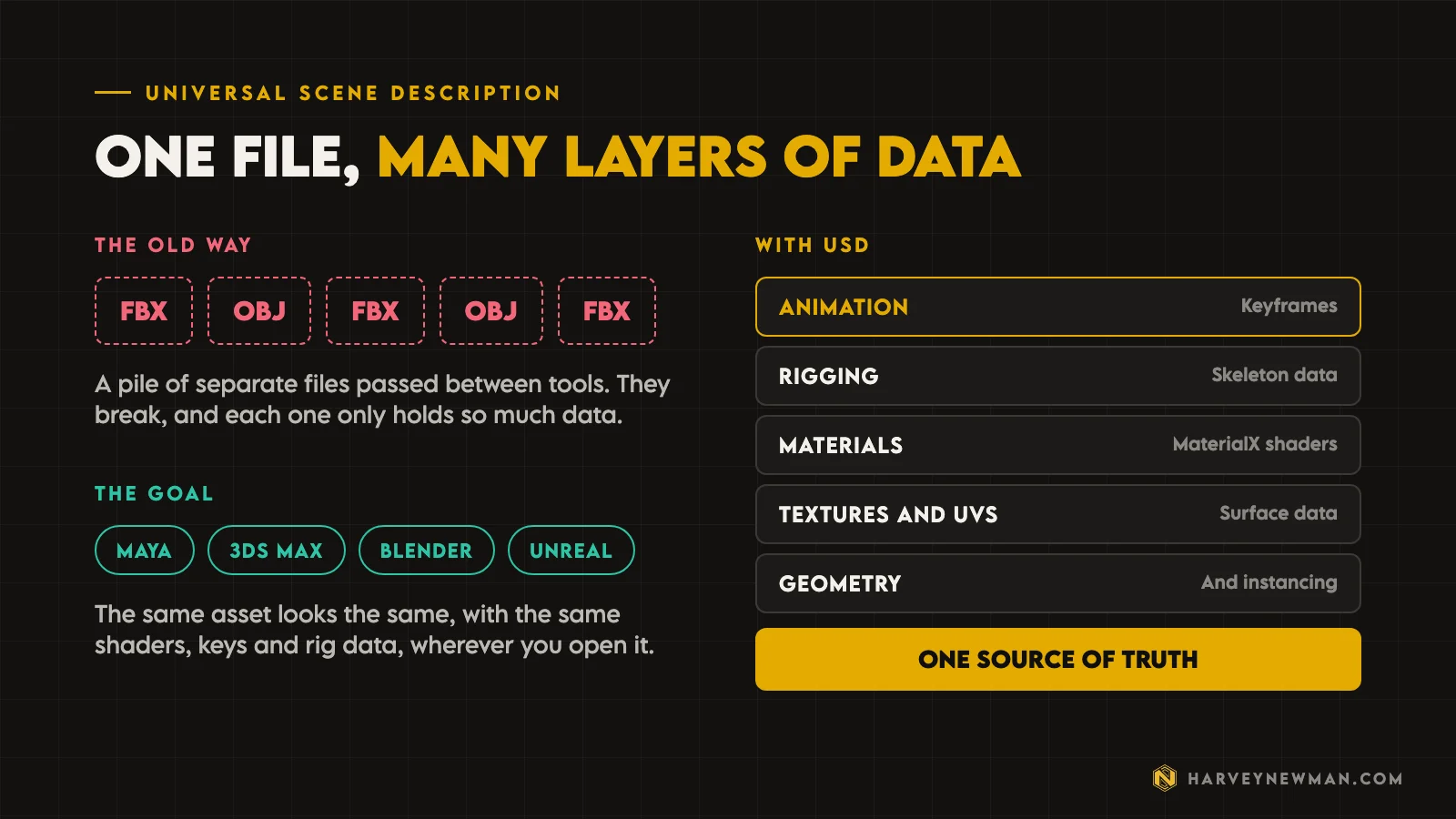
- LayersUSD holds data in layers, so you can work non-destructively. That's why the logo looks like layers.
- More dataThe more layers you add, the more data you hold: instancing, geometry, textures, UVs and materials through MaterialX.
- One source of truthOne USD file instead of a pile of FBX and OBJ files that break and only hold so much.
- Animation nextRigging and animation data can be added as layers too. KitBash3D has already been testing it.
The goal, as Mike put it, is that if you download an asset into Unreal, it looks the same as the same asset downloaded into Maya with Redshift. Same shader network, same keyframes, same rigging data. Sometimes they have to update things to make sure Maya, Max or Blender translate it perfectly, but that’s the direction.
For animators, that matters. Anything that stops your keys and rig data breaking on the way between packages saves you hours. If you want to see where this fits in a studio, I break down how a game animation pipeline works in another post.
How do you go freelance as a game animator?
Day two was about freelancing, and Daniel had a different perspective. He’s a freelance animator based in Germany, working for a Japanese studio.
He started in film, with studios like Framestore, and spent a long time there. At some point, he said, you have to decide what you want to make. Finding the style and the work you enjoy most is already hard. Once he had an inkling of where he could express himself more, he left film for games and started freelancing, for Riot and then for Unseen, among others.
How does that happen? Through your network. The one you build over the years and keep growing, because exchanging experience with other people is how you grow. In an industry where you need to keep learning and keep growing, at some point you don’t want to stop.
That’s also how he found indie games and swapped from AAA to indie. He loves it because the ideas, the workflows and the studios move a lot faster. It’s intense, and his current project lets him express much of what he always wanted to do.
It’s not like a 12-hour time zone difference is a deal breaker at all. It comes down to how you work.
On time zones, his take was practical. Many animators on his team are in Europe, including the animation director, which makes it easier within the discipline. It still synergises well with the Japanese time zone, and it did with the LA time zone when he worked for Riot. He has a wife, two kids and other responsibilities that matter to him, and he makes it work.
For the business side of going independent, I’ve written about how freelance animators and game developers can adapt to co-dev.
What is it like to be a technical animator?
Day three was tech animation. I asked our guests something I’ve wondered for years. Technical animators have animation nagging them for more buttons, pipelines, tools and plugins. Then the art department wants better deformation, more cloth. On one project we had capes, feathers, bows and arrows, nymphs and fairies. Then there’s implementation in game, the skeletal mesh and the logic. On top of that, things are broken everywhere.
So is being a tech animator a bit like being an entrepreneur inside a company? And how do you stay sane?
Emilio answered first, and his answer was passion. As technical animators, he said, they mostly serve animation, but there are many departments you have to respect and treat as well as you can. You sit in the middle of all of them, and the final goal is always the game.
What moves him is that even the smallest task matters. Everything comes through the tech animator, you do your part, however small, and it goes into the game. One step closer to finishing it. Small fix or huge character, demolition or rigging, it doesn’t matter.
- Things will break. A rig will break a million times. Most of the time, he joked, it’s user error.
- Love what you do. He thinks it’s essential in game development, whatever your age.
- Keep reinventing yourself. The software keeps changing, there’s always more of it, and it never ends.
Why gameplay animation is the most valuable skill in games
I added my own take here, because it’s one of the biggest game animation tips I can give.
If you want to be a cinematic animator in games, the jump from film is smaller, because the work is close to what you already do. But a gameplay animator is normally the most valuable animator you can be in games, because in the end it’s all about the game. And it’s hard, because you need to love games. You could see it in Kevin and Mostapha on day four. They live and breathe building systems.
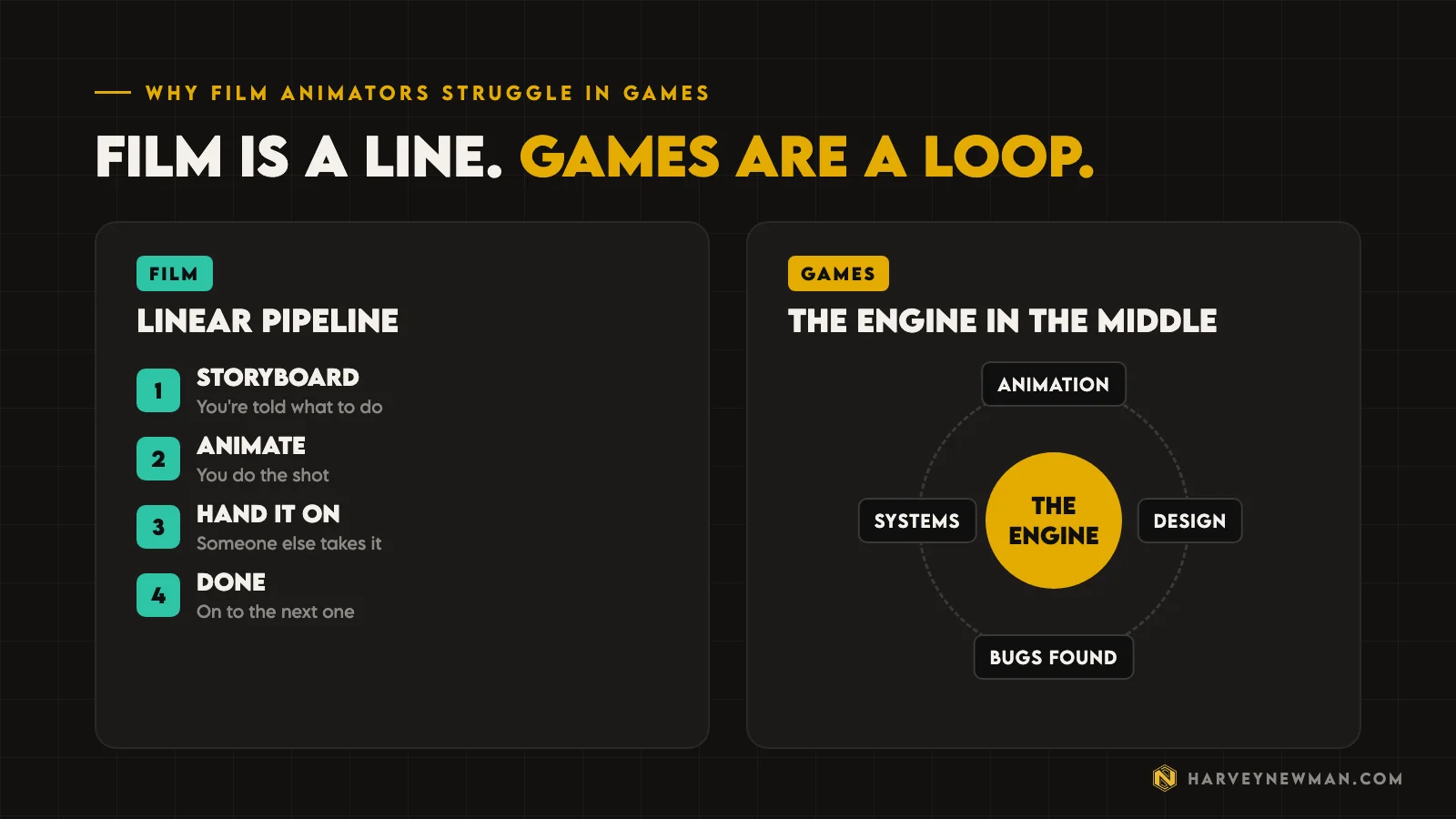
What I’ve found over time is that film has linear pipelines. You animate, then you give it to somebody else, and they do their thing. You’re used to being told what to do by a storyboard or a supervisor. You do it, it’s done, and you move on.
In games it's not linear. It's like a circle, with the engine in the middle.
Harvey Newman
Everything gets pumped into the engine. That confuses many people coming from film, because they don’t understand why they can’t make one animation, put it in the game and be done. It doesn’t work that way. Most of the film animators I’ve seen fail when they come to games fail because of that.
How many times will you redo a gameplay animation?
So I asked the day four guests: with all the iteration with designers on systems, how many times did they have to redo their animations?
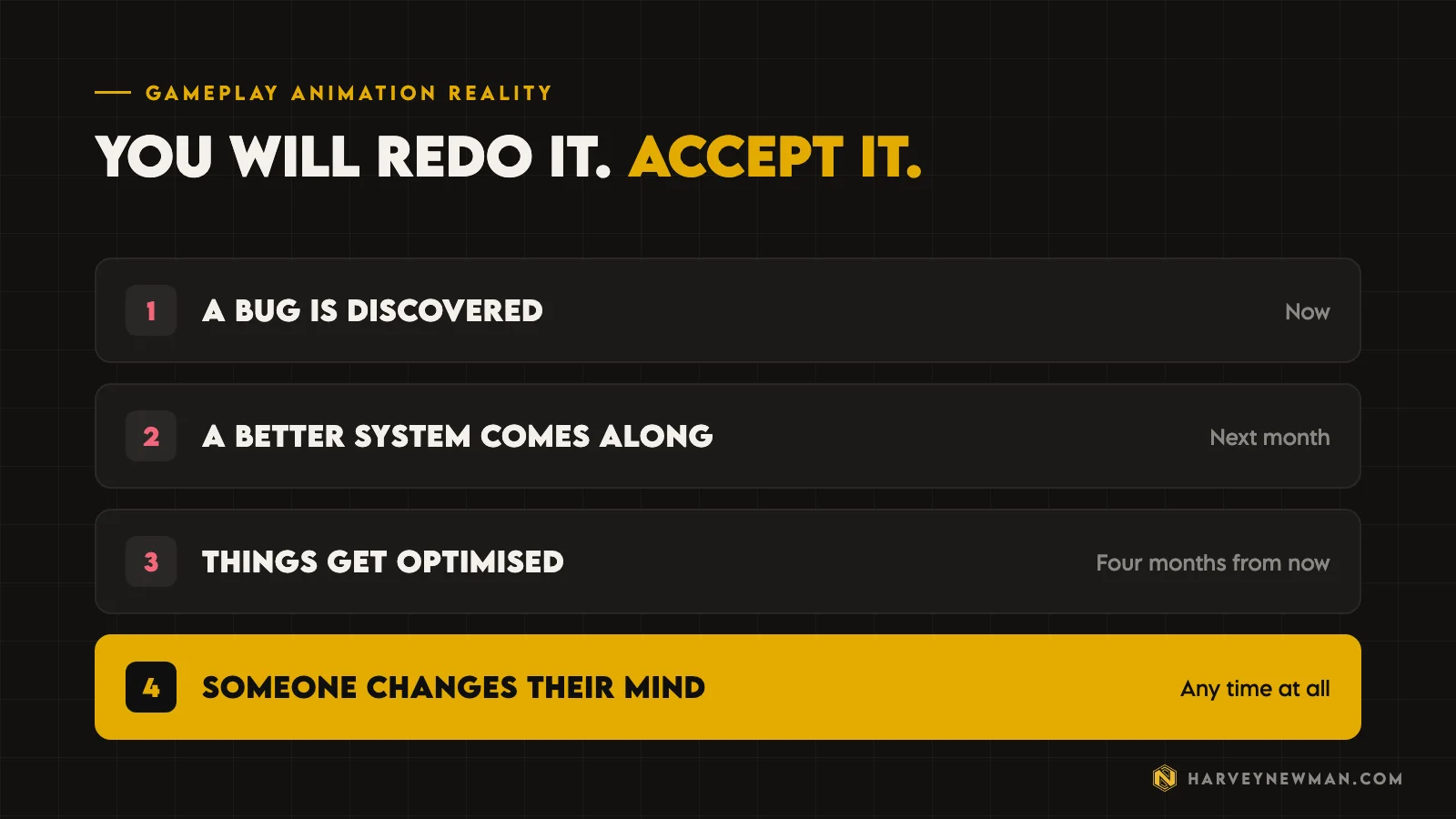
Mostapha Dhaouadi, animation director on Rematch, was clear. You have to accept that you will redo it. Now, maybe next month, maybe four months from now, when they discover a bug, find something better to do with the systems, optimise things or change their mind.
You have to accept that and embrace it.
Mostapha Dhaouadi
That’s why, he said, you need to be agile and nimble. Get to the point fast so you help the people around you visualise what you’re all trying to build. Get it in the game. It’s not always easy, but you should be conscious that your work will be challenged every day.
Should animators build a personal brand?
I closed the week by asking about the future of animation, YouTube and being an entrepreneur. Many animators are struggling to find a job right now because the industry is in a difficult position. When they look at people like us, they see we’ve built a name and assume things are easier for us. That’s not totally untrue. Things aren’t easy, but visibility helps.
Pierrick Picaut had strong opinions, and I liked them.
Don’t wait to have the best showreel in the world before you start putting it out.
Building an audience, whatever your ambitions online, is super important, he said. It makes a difference as an animator. Share what you do as much as possible. If your reel needs work first, that’s what I help with in the Animworks courses, but don’t let it stop you posting.
As an entrepreneur, things take time. If you go that way, do what you like. When you’re struggling with money or motivation, the passion is the only thing left, and it’s the only way to put in the extra work to maybe succeed.
He isn’t super worried about the future of animation. It’s evolving, and he thinks there are good reasons for the current crisis, including COVID and everything that happened at that time. He feels it’s slowly balancing out.
His last point is the one I’d leave you with. Every big company has an Instagram, a LinkedIn and a YouTube channel. If you want to be a professional, do what professionals do. Create your brand, and it will scale up with you at your own pace. Being online is part of the job now.
Which day of the Streamathon would you have wanted to sit in on? Come and tell me in the comments on the video.
The video
Watch the full breakdown
Questions people ask
What is gameplay animation?
Gameplay animation is the animation the player controls or reacts to directly: movement, combat, interactions. It's built into systems inside the engine and gets reworked many times as design changes, which is why it's often the most valuable animation skill in games.
What's the difference between film and game animation?
Film pipelines are linear. You get a storyboard, animate the shot and hand it on. In games, everything goes into the engine and comes back again, so you iterate with designers and systems over and over.
What does a technical animator do?
Technical animators build the rigs, tools, pipelines and in-engine setups animation needs, and fix whatever breaks. They serve the animators, but they also work with art, design and engineering, so they need to love solving problems.
Can you export animation with USD?
Yes. USD holds data in layers, and animation can be one of them alongside geometry, materials, textures and rigging data. The aim is that an asset looks and behaves the same in every package you open it in.
Do animators need a personal brand?
It helps. Building an audience makes a difference for an animator, and you shouldn't wait until your showreel is perfect to share your work. Every studio has Instagram, LinkedIn and YouTube now. Building your own presence is part of the job.
And remember,
there are no shortcuts for animation.
 Stay well, stay safe,Harvey NewmanBook a free call →
 Looking for knowledge?How to Thrive in the Games Industry: The Long GameMy book on building a career in games and keeping it. CRC Press, 246 pages.Get the book →
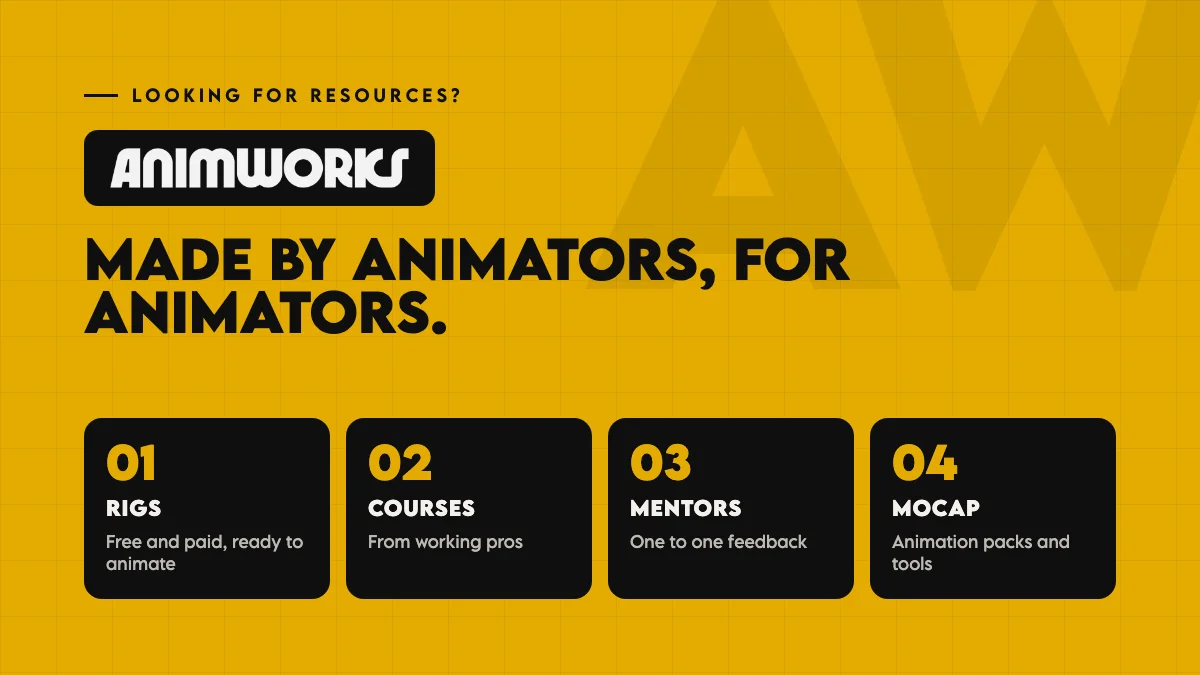 Looking for resources?Rigs, courses and mentors on AnimworksFree and paid rigs, courses from working pros, one to one mentoring and mocap packs.Visit anim.works →
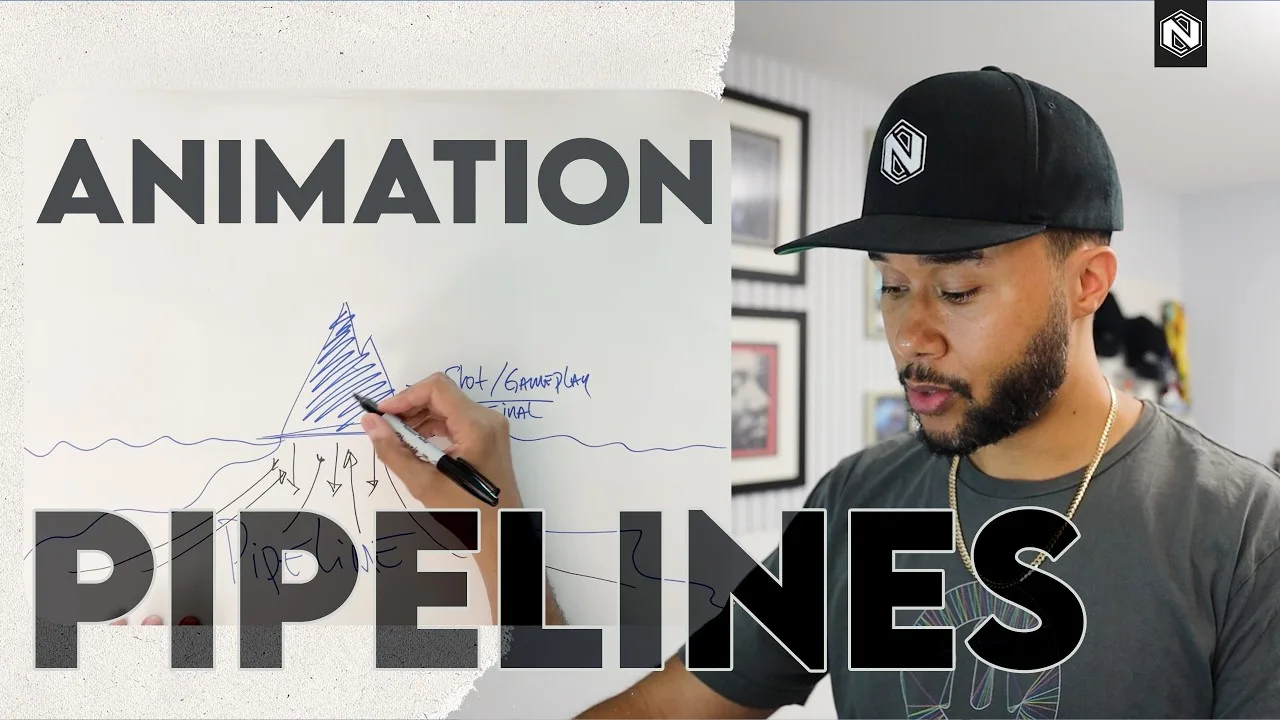 The Game Animation Pipeline: How I Build One, AAA or Indie12 Jun 2026
 Freelance Animator or Game Developer? How to Adapt to the Co-Dev Future20 Mar 2026
 Game Animation Metrics: How They Shape Player Experience29 Nov 2024
 The Reality of Being an Animator in 2026: How an Animation Career Has Changed16 Oct 2026