
Careers8 min read18 min video
Five things I was told. All five were wrong.
5 Game Development Career Myths That Cost Me 20 Years
Key takeaways
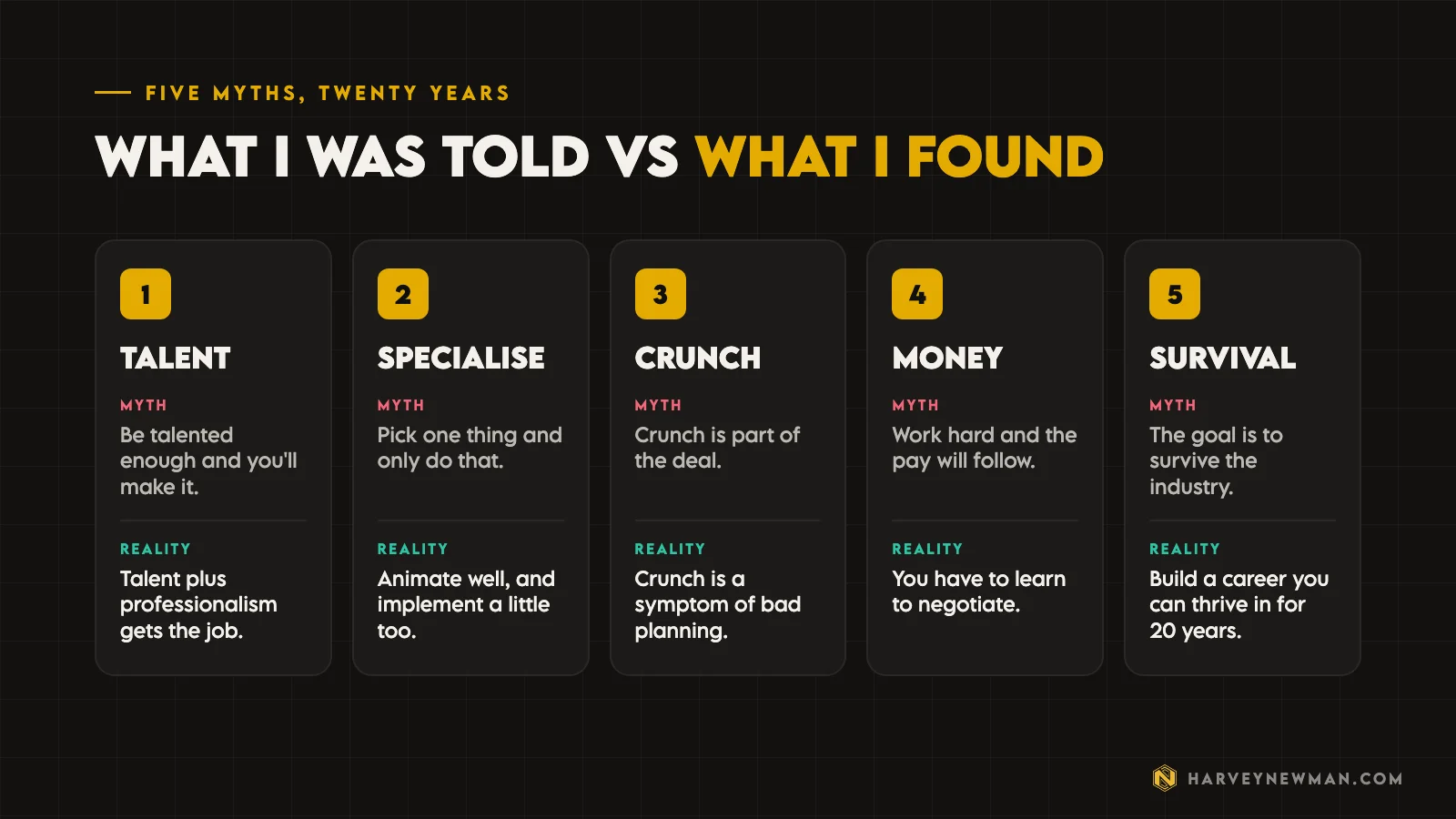
- Talent gets you noticed, but professionalism gets you the job: working with people, delivering on time and dealing with other departments.
- The old advice to specialise in one thing is fading. An animator who can also implement a little is more valuable to most studios now.
- There are two good lanes: the specialist compounds depth, the generalist compounds flexibility. Pick one on purpose.
- Crunch is a symptom of bad planning, not a law of the games industry. Red flag crunch, where leadership doesn't care what it does to people, is a different and darker thing.
- Learn to talk about money early. Studios that offer 1 to 5% a year while the game makes a fortune are counting on you not asking.
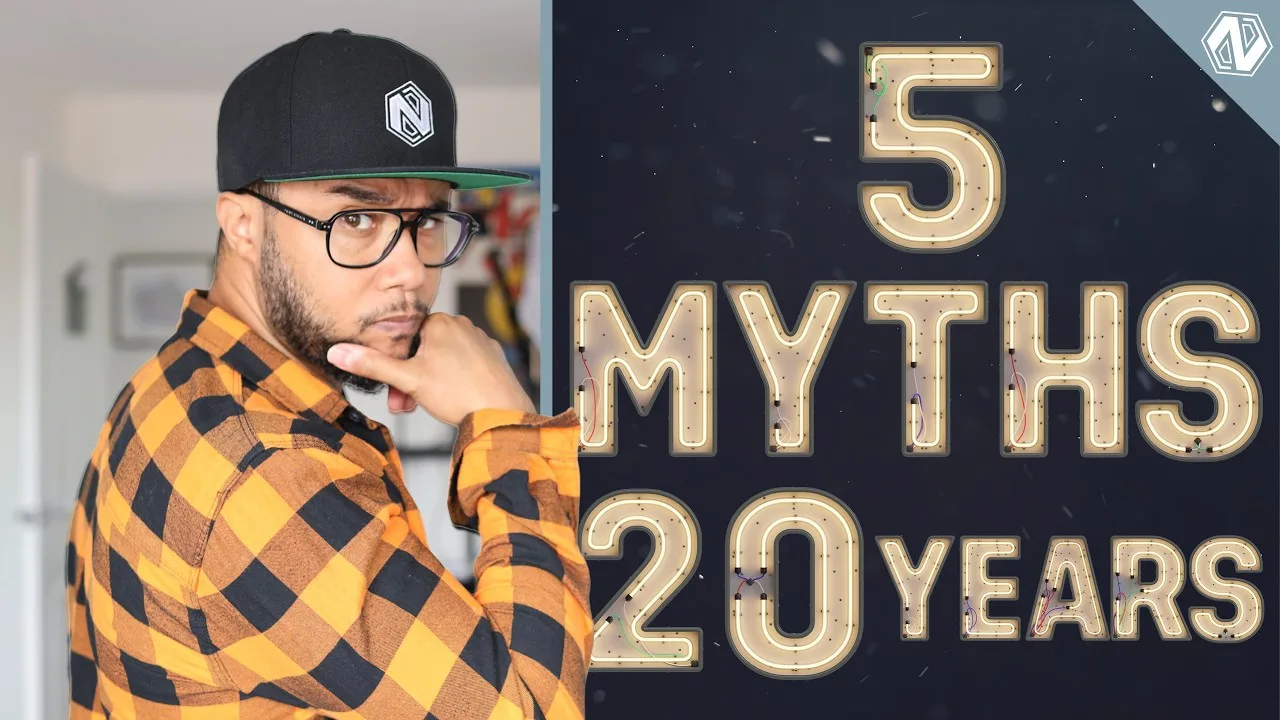
Some of the things the games industry tells you about your career are wrong. Not a little wrong. Fundamentally wrong. And you only realise how wrong after you’ve been here a long time. These are five game development career myths that took me far too many years to see through.
If you’ve been in the industry three to five years and something feels off about your career, or about choices you made because someone told you that’s what you have to do, this one is for you.
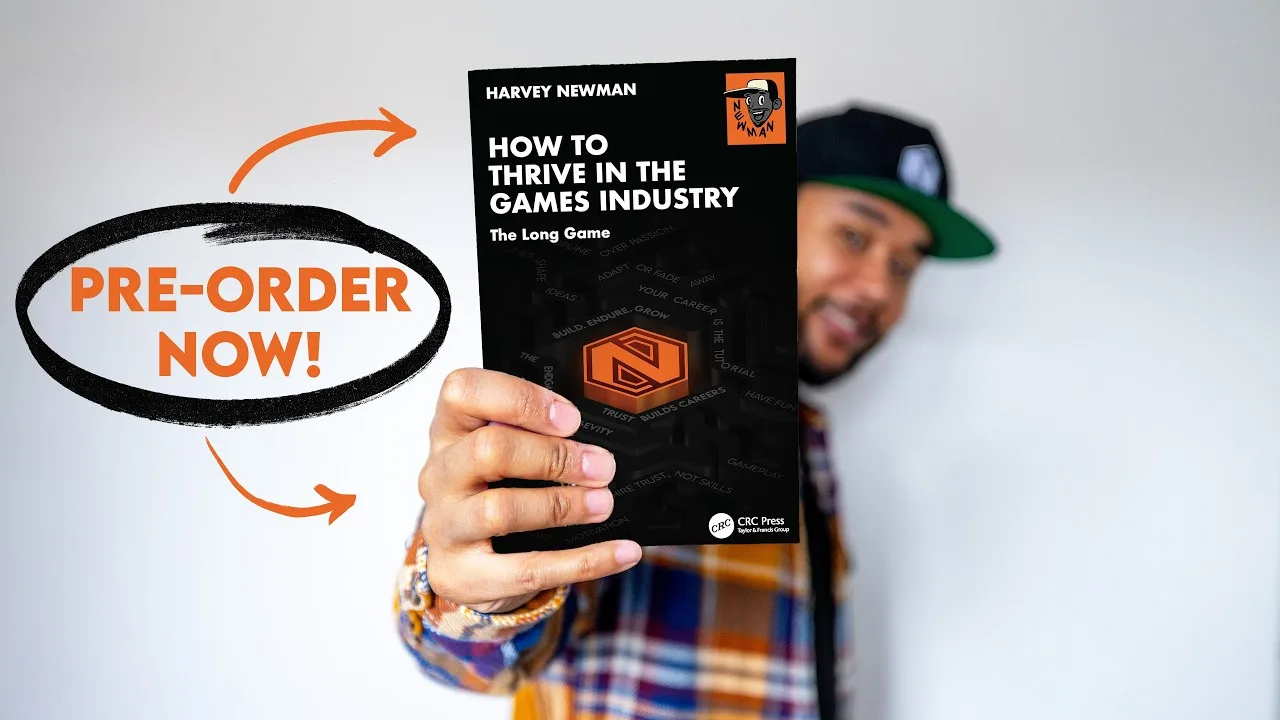
All five come from my book, How to Thrive in the Games Industry: The Long Game, which came out the day before I recorded this. The book goes much deeper on each one.
Myth 1: Is talent enough for a game development career?
This is probably the biggest one.
Before you even start, people tell you, especially at universities, colleges and on courses, that if you’re talented enough, you’ll make it.
I started out illustrating comics, because I wanted to be a comic illustrator. Then I pivoted to animation and stopped illustrating completely. In my head, if all I needed was talent, I had to be super talented at one thing. I didn’t see the bridge between illustration and animation, and that’s a mistake I regret to this day.
When I moved to animation, it was all about talent again. How can I be the best animator possible? And to this day, when I talk to students, they think that if they’re the best animator possible, they’ll get a job 100%.
Unfortunately, those two things don’t correlate in the industry.
You need to show your skills to get the job, because that’s why people want you. But you need more than that to be ready for the job, and that’s the part nobody tells you. You work on your craft, then you land the job and realise it’s a different thing altogether. Now you’re learning on the job:
- Working with others, and the politics that comes with it.
- Keeping things on time: Jira, bug tracking, schedules.
- Dealing with the next department, like audio, because they have a list of things you need to look after in animation.
There’s so much that it makes your head spin.
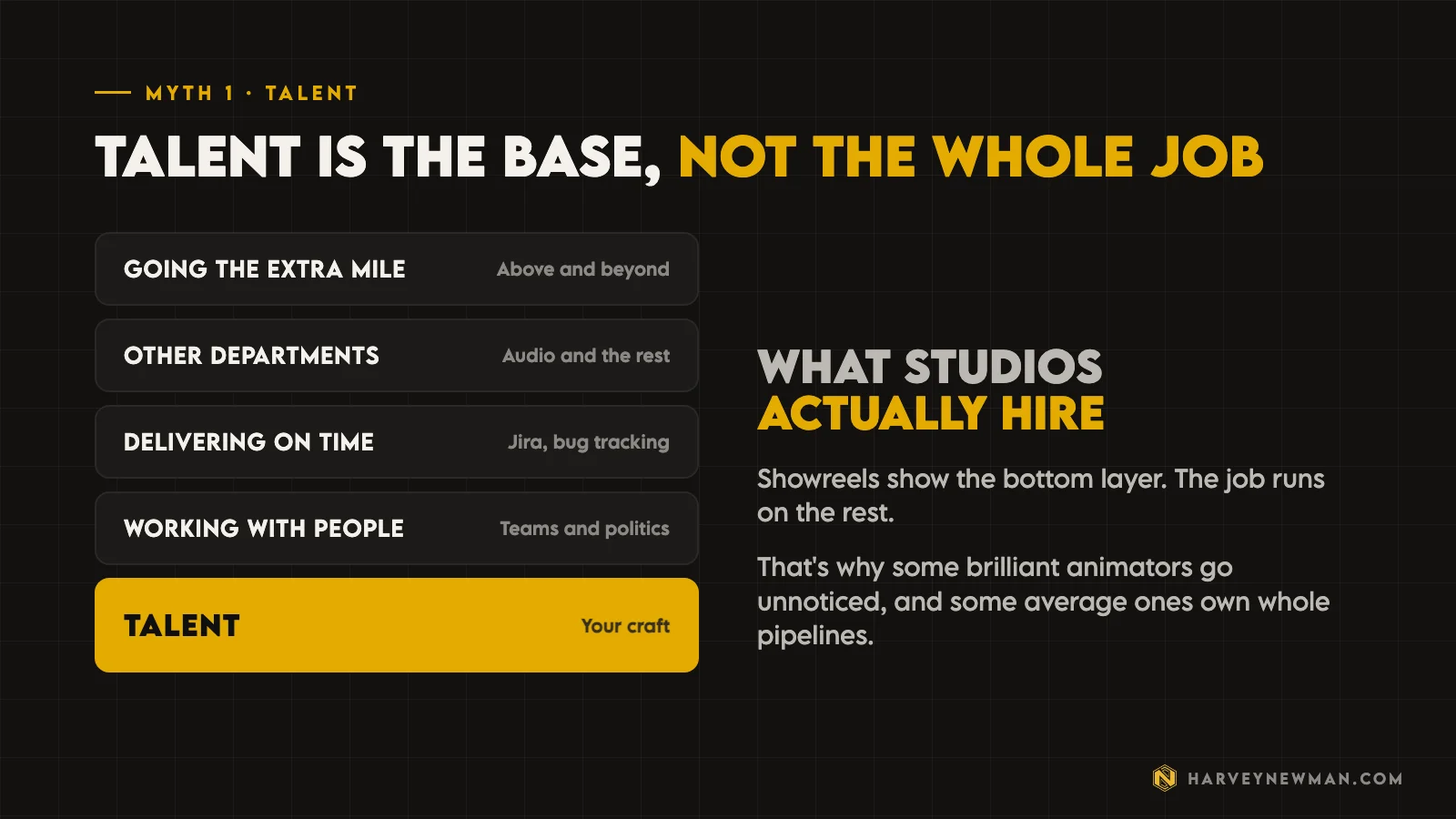
That’s why I know hugely talented animators that nobody knows about. I also know mediocre animators who have whole pipelines that belong to them and studios reaching out to them for work. In the industry, an animator who knows how to be professional, delivers on time and goes the extra mile is worth more than one who only makes pretty things.
I know that sounds horrible. You do need talent. I just wish people would say it’s talent plus professionalism, plus all the other layers on top. Instead they tell you it’s all talent, and the rest gets lost in the discussion.
Myth 2: Do you have to specialise in one thing?
This one has been changing over time.
When I started in the early 2000s, around 2002 and 2003, the advice was to specialise in one thing. There were plenty of generalists, but AAA was going bananas and indie was slowing down. The understanding was that if you specialised, you could make it into a big AAA studio, and that was the holy grail. So everybody specialised, and it stayed that way for maybe 15 years.
Only in the last five years or so has it shifted to a bit of both. You can specialise, but you can also be a jack of all trades. With the way AAA and indie are going now, being a bit of a jack of all trades pays off.
If you’re an animator, you should absolutely be great at animation. But knowing Unreal, a little logic, how Blueprints work, blend spaces and the other technical sides of animation helps you get the job. The same goes for software. If you know MotionBuilder and Maya, great. If you can animate in Unreal and in Maya, great. It all makes you more valuable to any company.
I see it now at Rekindled, our co-dev studio. A studio or client of a certain size needs an animator who can animate but also implement a little. Not technical animator level, just a little. So those are the people we’re chasing now.
That’s why I think the label of specialisation is getting dubious, and why it’s becoming more of a myth as the games industry changes. I go further into what studios want in future-proofing your game dev career.
Specialist or generalist: which lane should you pick?
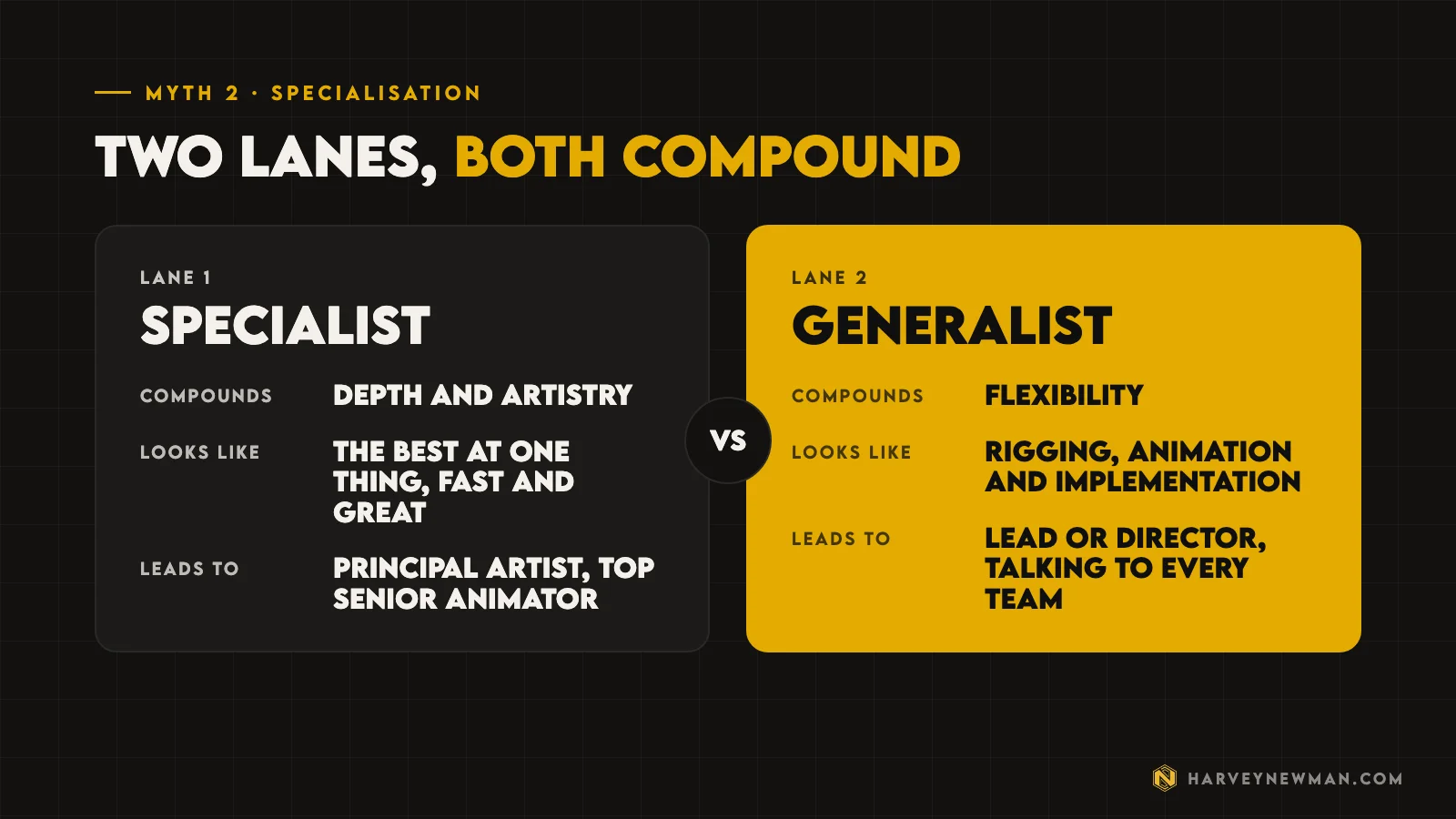
If you’re unsure where to go, I see two lanes.
- The specialistYou stay in your lane and compound depth and artistry. You become the best at what you do for a specific studio, or a handful of them.
- Where it leadsSpecialists often become principal artists or standout senior animators, the people who can do so much great work in so little time.
- The generalistYou learn more than animation: rigging, implementation, the lot. Instead of depth, you compound flexibility.
- Where that leadsGeneralists often become leads or directors, because they can talk to effects, animation, rigging and tech animation in their own language.
If staying in your lane is what you want, kudos to you, do that. If you lean generalist, the more you know, the better. Studios look at someone who can do many things and see a person who can lead the rest of the team.
Myth 3: Is crunch culture part of the deal?
This one is massive, and it’s personal to me, because I had so many bad experiences with it.
The myth is that once you join the games industry, crunch is part of the deal. Like specialisation, this one is changing. From the early 2000s until maybe five to ten years ago, studios didn’t care whether you crunched. Now they’re genuinely trying, because they’re realising constant crunch hurts their marketing and their image. I love that, and I hope it keeps going this way.
But to bust this myth properly:
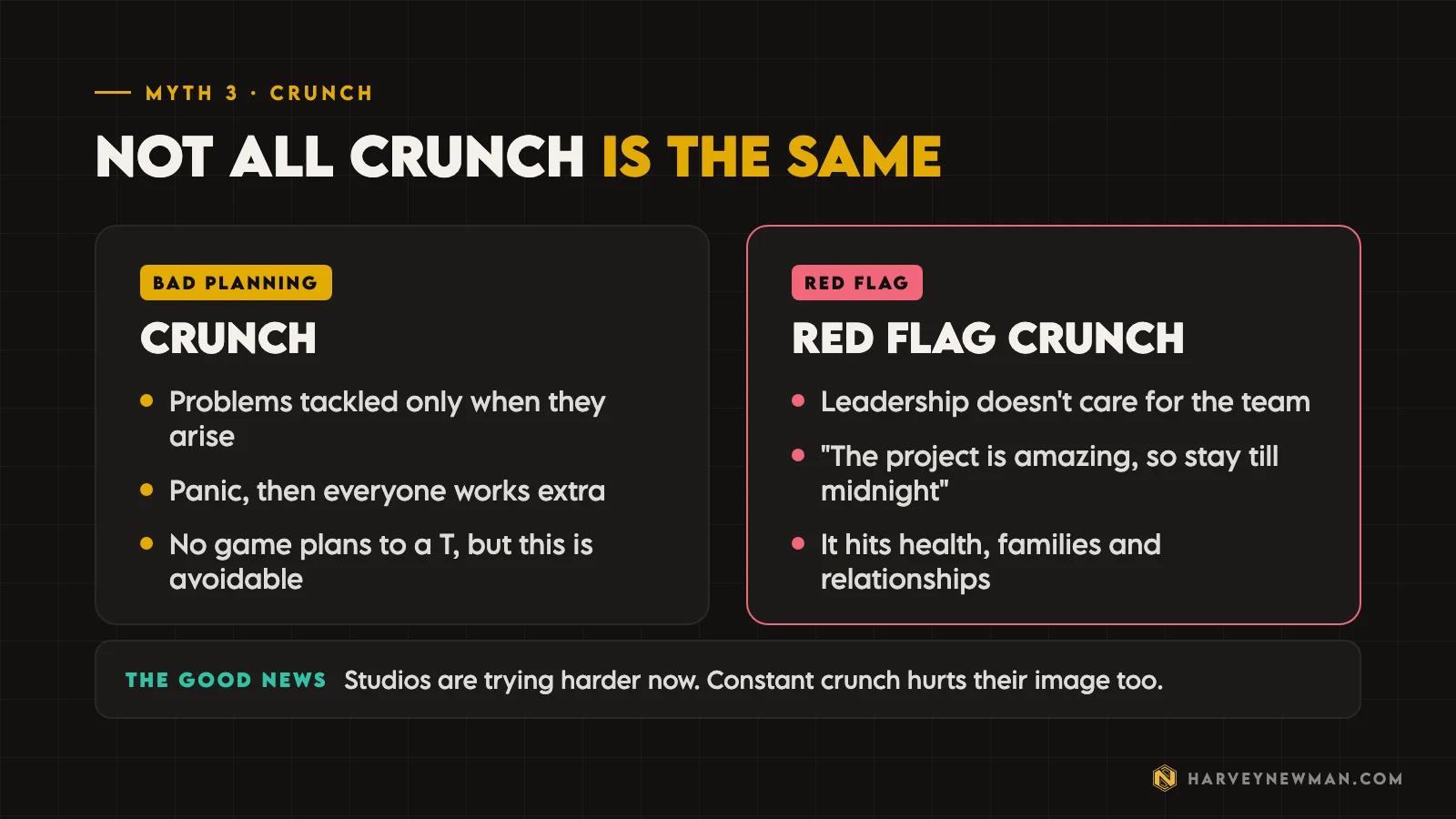
Crunch is not a symptom of the industry. It's a symptom of bad planning.
Harvey Newman
If you’re crunching, whatever the studio, it’s because the project wasn’t planned well enough. No game can be planned to a T. Games are complex and things change all the time. I understand that.
But some studios don’t care about staying on the straight and narrow. They say, “We’ll figure it out in two years.” If you only tackle a problem when it arises, you haven’t planned for it. So when it arrives, everyone panics, everyone works extra, and it’s a problem for everybody. That’s what crunch is in the games industry.
What is red flag crunch?
Red flag crunch is a whole new level. It starts affecting people personally: their families, relationships breaking up, people needing to see a psychologist or get help, people feeling suicidal.
It comes from leadership that doesn’t care for its staff. The thinking goes: our project is fantastic and you’re paid well, so sit down and do the job. If we ask you to stay at your desk until midnight, you do it, because the project is amazing, the money is amazing and it’ll look great on your CV when the game ships.
Studios that push people to the point where they crash and feel horrible are the dark side of the industry. For that chapter of the book I interviewed Jonathan Cooper, an animation director whose talent I admire. He shares his angle on crunch and the red flags to look out for as your career grows.
Myth 4: Will hard work take care of the money?
This is a tough myth to break, because the industry overall, and animation specifically, struggles to talk about money.
For the longest time, I found it hard to negotiate my salary. I’m all about the hard work and showing how good I am for the job. Those two things were my currency. If I was doing well on both, I knew I was making it.
Then there’s the third thing: getting paid for them. That always felt like it was on the back burner.
So early on, when a studio said, “We can pay you this much more,” and it was 1%, 2% or 5% of your salary, the bare minimum, you’d say yes. You’re still in your dream job, on a project you love, working with your friends. You love your team. You’ll live on it for the next year or two.
Meanwhile the studio profits from the game, and the C-suite and the people at the top are probably well off.
But then you are not.
How do you negotiate a salary in the games industry?
It took me a long time to learn how to negotiate. It comes down to being able to say, “Look, these are the things I do well, and I think I deserve more for these reasons.”
It also means looking elsewhere. If you’re not happy and they keep saying no, find a way to keep moving up, in another studio if you have to.
The earlier you learn this, the better and more successful your career will be. You’ll spend less time thinking about money and more on the creative side.
There’s a nuance here too. Some companies care about you and some don’t, and the difference is subtle. If you miss the signs, you can be somewhere for years without realising it never cared about you from the start.
Myth 5: Is the goal just to survive the games industry?
This is the reason I wrote the book. It’s called How to Thrive in the Games Industry, and at the bottom it says The Long Game.
Especially with the climate of the industry right now, people feel like they’re trying to survive it. I came close to calling the book How to Survive in the Games Industry. But the more I thought about it, the more I realised I’m not surviving. I feel like I’m thriving, and I want to share how others can thrive too.
Instead of thinking about survival, think about thriving.
Harvey Newman
Thriving means building a career that’s durable and resilient, one you’re happy with and could keep doing for the next 20 years if you needed to. Games will always be here in one shape or another, so you have a lifetime to invest in them.
I want you to learn from my mistakes and from the mistakes of others. In the book I also interview other people with as much experience as me or more, on crunch, on building your own brand with Pierrick Picaut, and more. You see each subject from several perspectives, from people who have been thriving in this industry for many years.
If you’re going through it right now and the work has dried up, read my advice for animators who are struggling. And if you want the bigger picture, the reality of being an animator in 2026 shows how the animation career has changed since I started.
Did any of these game development career myths cost you?
Do any of these sound familiar? Have you been through some of them, or are you watching out for them now?
I’d love to hear which myth hit you hardest. Come and tell me in the comments on the video. I read every one.
The video
Watch the full breakdown
Questions people ask
What are the biggest myths about a game development career?
The five I believed longest were that talent alone is enough, that you must specialise in one thing, that crunch is part of the deal, that hard work will sort out your pay, and that the goal is to survive the industry rather than build a career you can thrive in.
Is talent enough to get a job in the games industry?
No. You need talent to show your skills, but the job also needs professionalism: working with other people and departments, hitting deadlines, using tools like Jira and going the extra mile. I know brilliant animators nobody has heard of and average ones who own whole pipelines.
Should I be a specialist or a generalist in game development?
Both lanes work. Specialists compound depth and often become principal artists or top senior animators. Generalists compound flexibility and often end up as leads or directors. For animators today, being very good at animation and able to implement a little in Unreal is a strong combination.
Is crunch normal in the games industry?
Crunch has been common, but it is a symptom of bad planning rather than something the industry requires. Studios are trying harder now because constant crunch hurts their image. Red flag crunch, where leadership pushes people until it damages their health and families, is a warning sign to leave.
How do I negotiate my salary in the games industry?
Be ready to say what you do well and why you deserve more. If the studio says no, look at other studios where you can move up. Many of us accept 1 to 5% a year because we love the project and the team, while the people at the top do very well.
And remember,
there are no shortcuts for animation.
 Stay well, stay safe,Harvey NewmanBook a free call →
 Looking for knowledge?How to Thrive in the Games Industry: The Long GameMy book on building a career in games and keeping it. CRC Press, 246 pages.Get the book →
 Looking for resources?Rigs, courses and mentors on AnimworksFree and paid rigs, courses from working pros, one to one mentoring and mocap packs.Visit anim.works →
 Game Developer Skills the Industry Wants Now: How to Future-Proof Your Career13 Feb 2026
 Can't Find Animation Jobs? Advice for Animators Struggling Right Now23 Jan 2026
 How to Thrive in the Games Industry: Inside Harvey Newman's Book20 Feb 2026
 The Reality of Being an Animator in 2026: How an Animation Career Has Changed16 Oct 2026