
The book8 min read16 min video
20 years of notes. 13 chapters. One long game.
How to Thrive in the Games Industry: Inside Harvey Newman's Book
Key takeaways
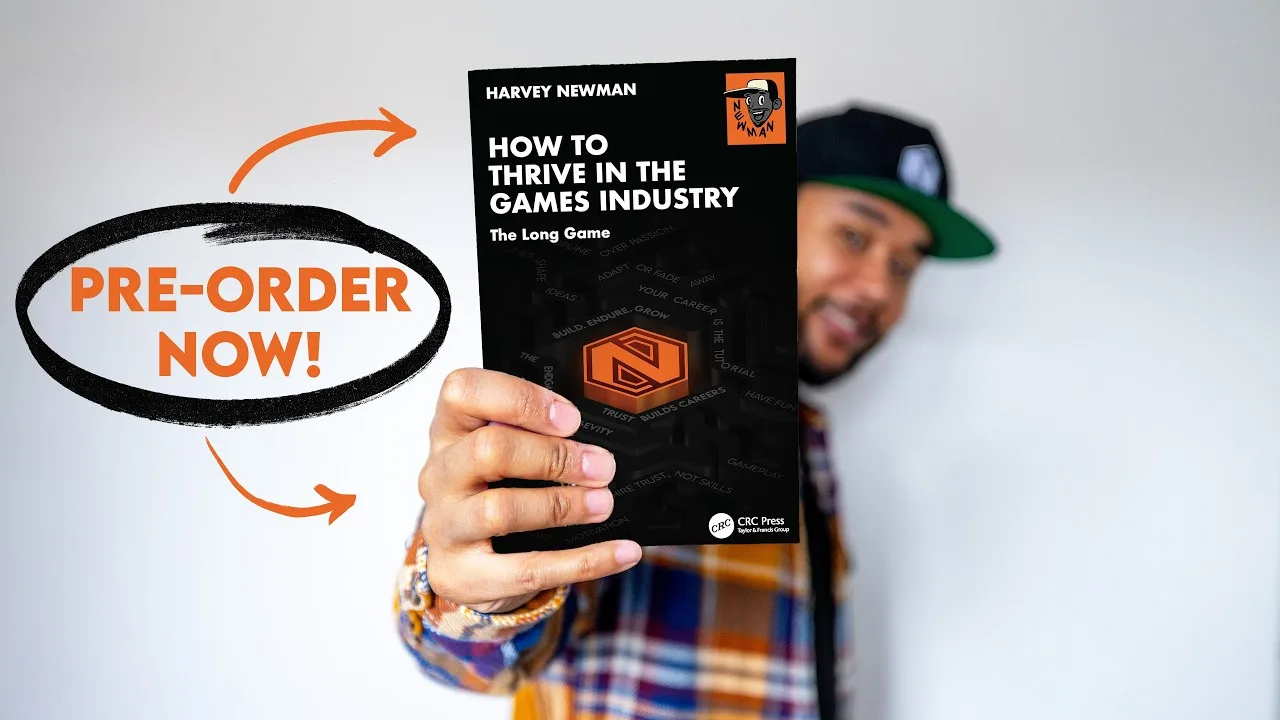
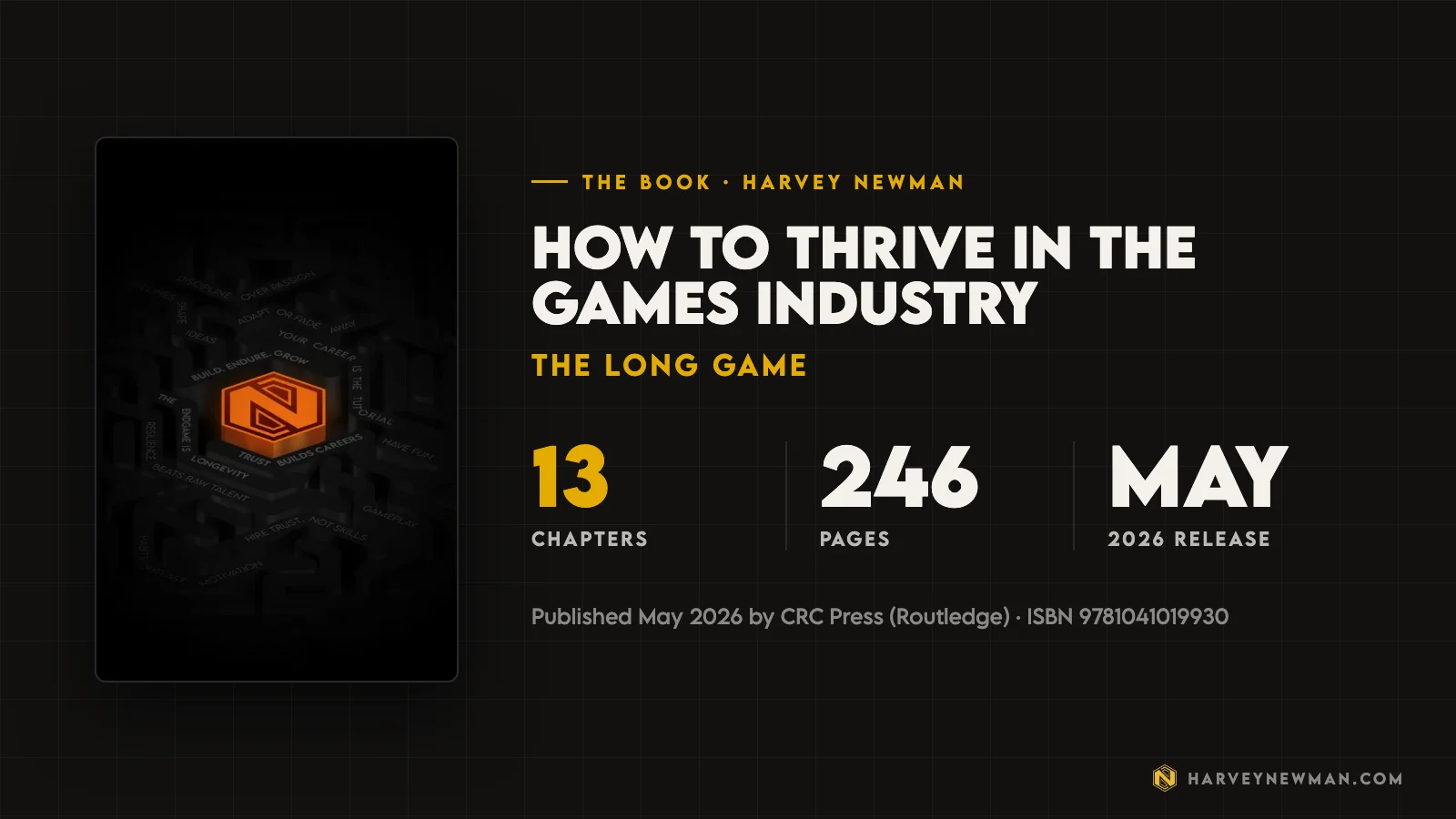
- How to Thrive in the Games Industry: The Long Game is Harvey Newman's career book for game developers, published by CRC Press (Routledge) in May 2026.
- It grew out of 20 years of private notes Harvey kept as a compass through the industry, after a conversation with Game Anim author Jonathan Cooper.
- 13 chapters cover the full arc of a career: studio types, the development lifecycle, crunch and burnout, staying relevant, indie, business, personal brand, moving up and studio closures.
- Four or five interviews with people as experienced as Harvey, or more, back up his view. Without comparing notes, they kept landing on the same lessons.
- Early reviews come from people at Ubisoft, CD PROJEKT RED, Valve and Epic Games, plus animation director Jim Jagger.
On this channel I’ve been talking about a book for a long time. I announced I was writing it, signed to a publisher, and wrote it. It was completely different from anything I’ve done before. Now it’s here: How to Thrive in the Games Industry: The Long Game, published by CRC Press in May 2026.
This is why I think the book needed to exist, what’s in it, and why it might be useful to you. I put more of myself into it than anything I’ve made.

Why I wrote How to Thrive in the Games Industry
First, a shout out to Jonathan Cooper, who wrote Game Anim. It’s a brilliant book about game animation and you should read it.
Jonathan and I had a chat back when I was still living in Scotland. He’s a lovely guy who became a good friend, and I picked his brain about what it was like to write a book and put it out there. After that conversation I started thinking about what I would write.
I realised that over 20 plus years in the industry I’ve kept notes, notebooks and bits I keep to myself and don’t share with anyone. They keep me grounded. They work like a compass for how to thrive in the industry and how to direct myself through it.
I’d shared a few nuggets here on the channel. But the more I looked at those notes, and the more I talked about them with my wife, the more I thought: if I share this, other people can use it in their careers too.
Why a book and not just YouTube videos?
There’s only so much you can say in a 10 or 20 minute video. A book lets me break it down properly, as a sequence that gives you a real path through this industry.
It’s important for people to know what they’re getting themselves into.
If I were starting over, even with how much the industry has changed, I’d love to know more about what’s expected of a game developer at each stage of a career. That’s what made way for How to Thrive in the Games Industry: The Long Game.
What’s in the book? All 13 chapters
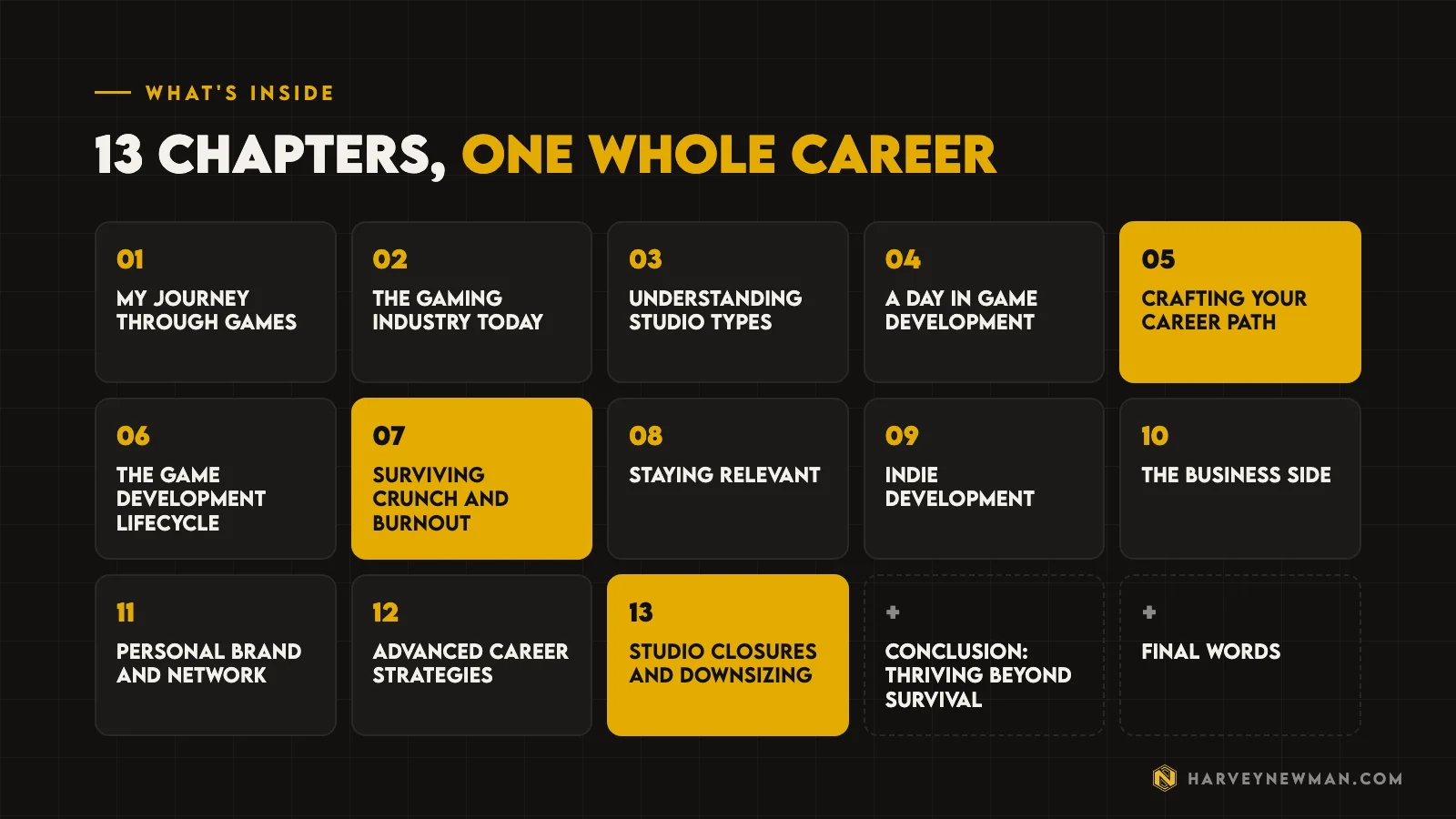
The chapters go deep, and it’s hard to do them justice in a short video. This is the shape of it.
Understanding the industry: chapters 1 to 4
Chapter 1 is My Journey Through Games, so you know who’s talking. If you want the short version, I told it in how my Cape Verdean roots shaped my career.
Chapter 2, The Gaming Industry Today, looks at how things have changed. People romanticise the past. We look back and say things were so much better in the early 2000s. Were they? I’m not sure, so I compare the two.
Chapter 3, Understanding Studio Types, covers indie, AA and AAA, and how those labels mean different things depending on where you are in the world, what part of the industry you’re talking about and what the game’s budget is.
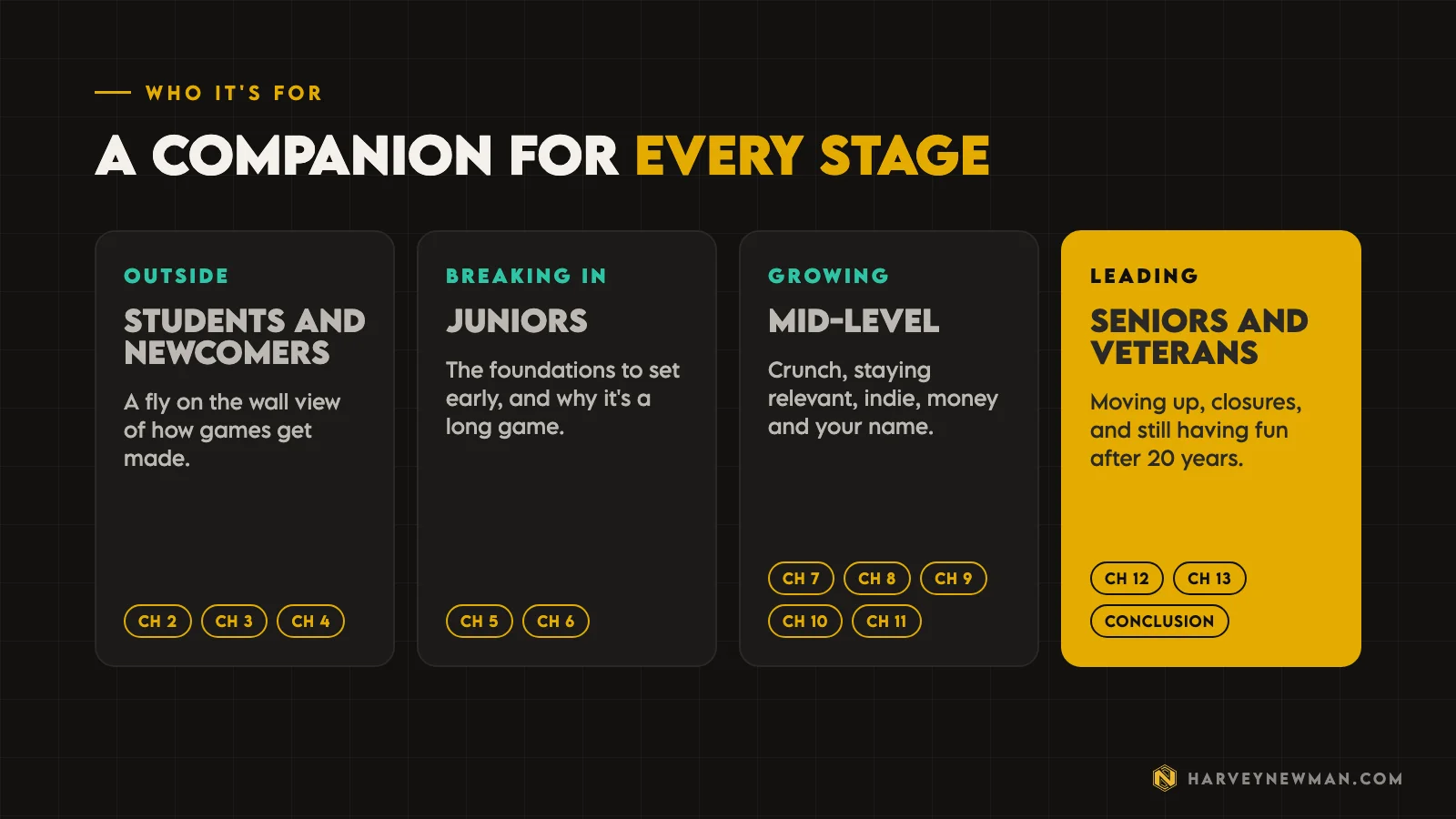
Chapter 4, A Day in Game Development, is for anyone outside the industry who is starting to understand it. A fly on the wall view of what happens behind the scenes as games get made.
Building your career: chapters 5 and 6
Then the meat of the book. Chapter 5, Crafting Your Career Path, lays the foundations: how you should start, and the things that even experienced people may not have set up yet but should, to be as successful as possible. This is where the long game comes in.
Chapter 6 is Understanding the Game Development Lifecycle. People, even experienced ones, think game development is much shorter than it is. It takes a long time, and the cycles have micro cycles inside them. You need to understand how that works to see the big picture of how a game is made, and you usually only see the connections after going through those cycles a few times, at a few studios.
- Crunch and burnoutThere are many types of both. Going through my notes, I realised I'd been through most of them.
- Staying relevantOn everyone's mind as the internet grows, influencers become a thing, AI arrives and careers change.
- Indie and businessEveryone is enamoured with indie right now, but it's hard. Follow the money and the industry starts to make sense.
- Studio closuresThe book wouldn't be genuine without it: where we've been, where we are, and how to get through it.
Surviving crunch and burnout in game development
Chapter 7 matters most to me. There are many types of crunch and many types of burnout, and the more I wrote, the more I realised I’ve been through all of them, or most of them.
We think of crunch as something superficial that just happens. It creeps up on you. This chapter goes deep, and I found writing it eye opening.
Staying relevant as a game developer
Chapter 8, Staying Relevant, is at the top of people’s minds right now, especially as the internet expands, influencers become a thing, AI becomes a thing and careers change. I go into it in depth. I’ve also written about how to future proof your game dev career.
It isn’t only my perspective. I interviewed four or five people for the book, all as experienced as me or more, to get their views on the subjects I cover.
Most people in this industry go through the same things. They go around in circles.
Harvey Newman
I didn’t ask them to agree with me, and we still ended up agreeing on most of the big things. That reinforces the idea that most people in this industry go through the same experiences, sooner or later. If you can see those circles from the top down, you can avoid going round them yourself. That’s what I hope makes the book useful.
Indie development and the business side
Chapter 9 is Indie Development: The Path Less Travelled. I’m passionate about this right now because I have Proxima, my game studio, and I worked with other indies before Proxima. Everyone is enamoured with indie development, but it’s hard. More on that in why I left AAA to go independent.
That leads into chapter 10, The Business Side: Understanding Development Economics. I interviewed Tim, who has a strong business head and helps studios around the world. Understanding the business side matters early in your career and even more as you get more experienced. Many of the industry’s pitfalls only make sense when you follow the money.
Building a personal brand in the games industry
Chapter 11 is Building a Personal Brand and Network in the Games Industry. How do I promote myself? Should I put myself out there if I don’t feel like it, or keep my head down and work nine to five? How do I pivot?
For this one I interviewed Pierrick Picaut, a good friend and fellow YouTuber, because he has built his personal brand so well. We wanted to see whether our views lined up, and they echo each other.
Moving up, and surviving studio closures
Chapter 12, Advanced Career Strategies: Moving Up the Ladder, is for mid-level and senior people, through to directors. It’s for anyone who feels a bit stale and wants to know where to go next.
Chapter 13 is Surviving Studio Closures and Industry Downsizing, the thing people think about most right now. The book wouldn’t be genuine without it. It covers where we’ve been, where we are, where we’re going, and how to navigate those waters in a way that makes sense, still has some fun in it, and doesn’t burn you out.
Still having fun after 20 years
The conclusion, Thriving Beyond Survival, is about being here for 20 plus years, or however long you’ve been around, and still having fun doing it. I don’t think people talk about that enough.
It can’t be overstated how precious it is to have people who have been in the industry a long time and are still positive, still enjoying it and still sharing what they know. People dismiss that institutional knowledge, but it’s arguably more important than tutorials or experience in one specific field.
Without those champions, we're not going to survive anything.
Harvey Newman
That’s how we move forward as an industry.
Early reviews of How to Thrive in the Games Industry
As I finalised the book I thought about who to send it to, picked a handful of people I think are brilliant, and sent it over. What they said touched me.
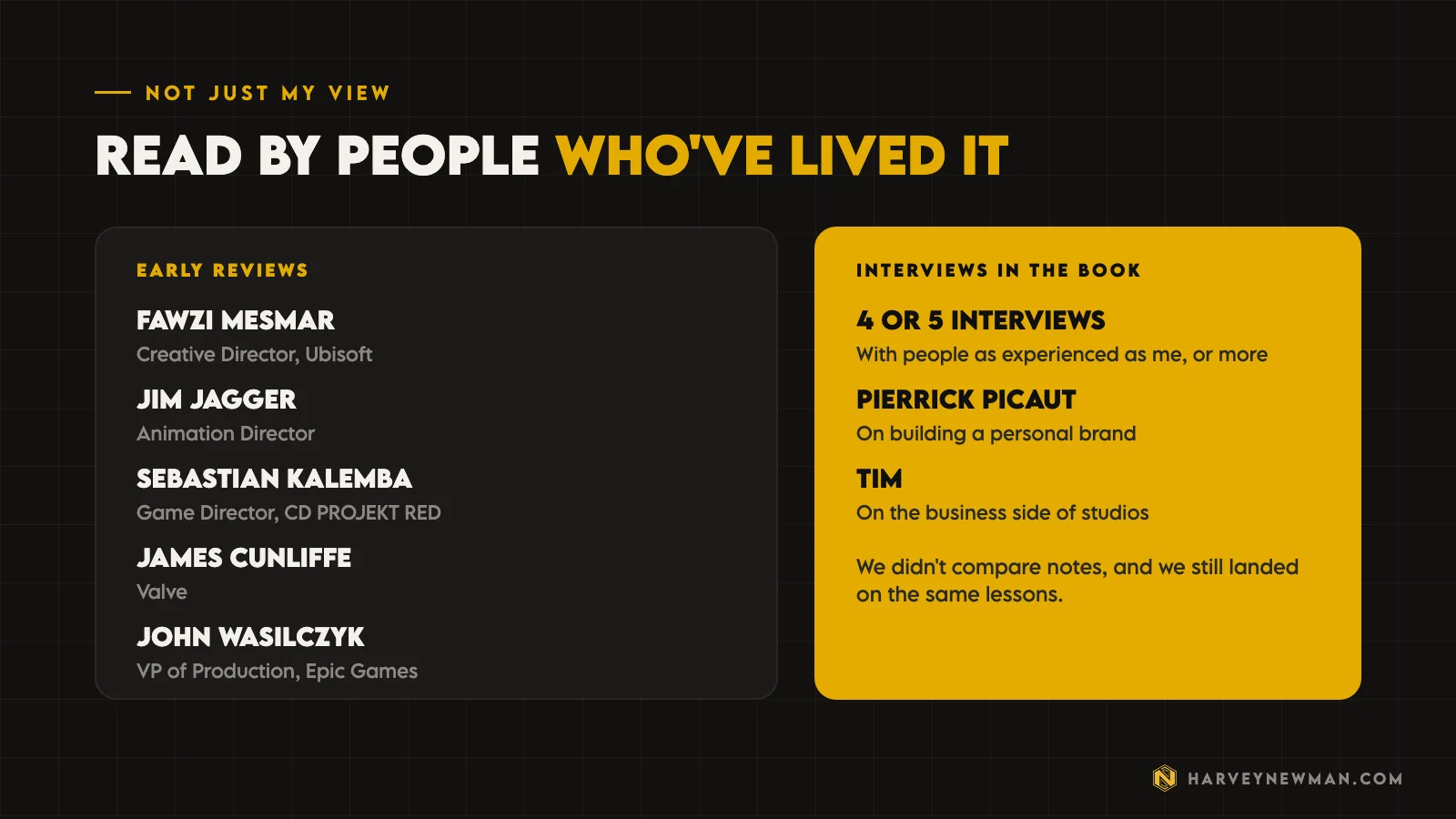
- Fawzi Mesmar, Creative Director at Ubisoft. We worked together at DICE.
- Jim Jagger, an animation director I’d call a director of directors.
- Sebastian Kalemba, Game Director at CD PROJEKT RED, directing The Witcher IV.
- James Cunliffe at Valve. He was one of the animators I looked up to when I was mid-level, before he moved to the US.
- John Wasilczyk, Vice President of Production at Epic Games. We also worked together at DICE.
I hope that gives you confidence the book has what it takes to help you build a successful career, and that it becomes a companion you keep coming back to.
Where to buy the book
You can get How to Thrive in the Games Industry: The Long Game from Routledge, from Taylor & Francis, or on Amazon. The ISBN is 9781041019930. Buying it directly supports everything else I make going forward.
I hope it’s something you take with you as you become a more experienced game developer, especially in the moments when everything feels like it’s on fire. You’ve just lost your job and don’t know what the next step is. I wish I’d had a book like this to go back to, to find at least part of the way through, and to know I wasn’t alone in feeling that way.
If you want help with your own career or studio in the meantime, that’s what my consultancy is for.
Have you read it, or is there a chapter you want me to cover in more depth? Tell me in the comments on the video.
The video
Watch the full breakdown
- 0:00Intro
- 0:45Why I wrote this book
- 1:42What inspired me
- 2:38Why a book and not just YouTube
- 3:29Where to get it
- 4:10Chapter breakdown
- 6:24Surviving crunch and burnout
- 6:53Staying relevant
- 8:14Indie development
- 9:22Building a personal brand
- 10:21Studio closures and downsizing
- 11:52Early reviews
- 13:28Signed copies
- 14:19Outro
Questions people ask
What is How to Thrive in the Games Industry about?
It's a practical career guide for game developers by Harvey Newman. Across 13 chapters it covers how the industry works, building a career path, the development lifecycle, crunch and burnout, staying relevant, indie development, the business side, personal brand, moving up and surviving studio closures.
Who wrote How to Thrive in the Games Industry: The Long Game?
Harvey Newman, an animation and game director with over 20 years in games. It was published by CRC Press, part of Routledge and Taylor & Francis, in May 2026. The ISBN is 9781041019930.
How many pages is How to Thrive in the Games Industry?
The publisher lists it at 246 pages across 13 chapters, with an introduction, a conclusion called Thriving Beyond Survival, and final words.
Where can I buy How to Thrive in the Games Industry?
It's available from Routledge, from Taylor & Francis, and on Amazon.
Is How to Thrive in the Games Industry for beginners?
Yes, and for everyone after that. The early chapters give newcomers a fly on the wall view of how games are made. Later chapters are for mid-level and senior developers thinking about crunch, staying relevant, moving up and studio closures.
And remember,
there are no shortcuts for animation.
 Stay well, stay safe,Harvey NewmanBook a free call →
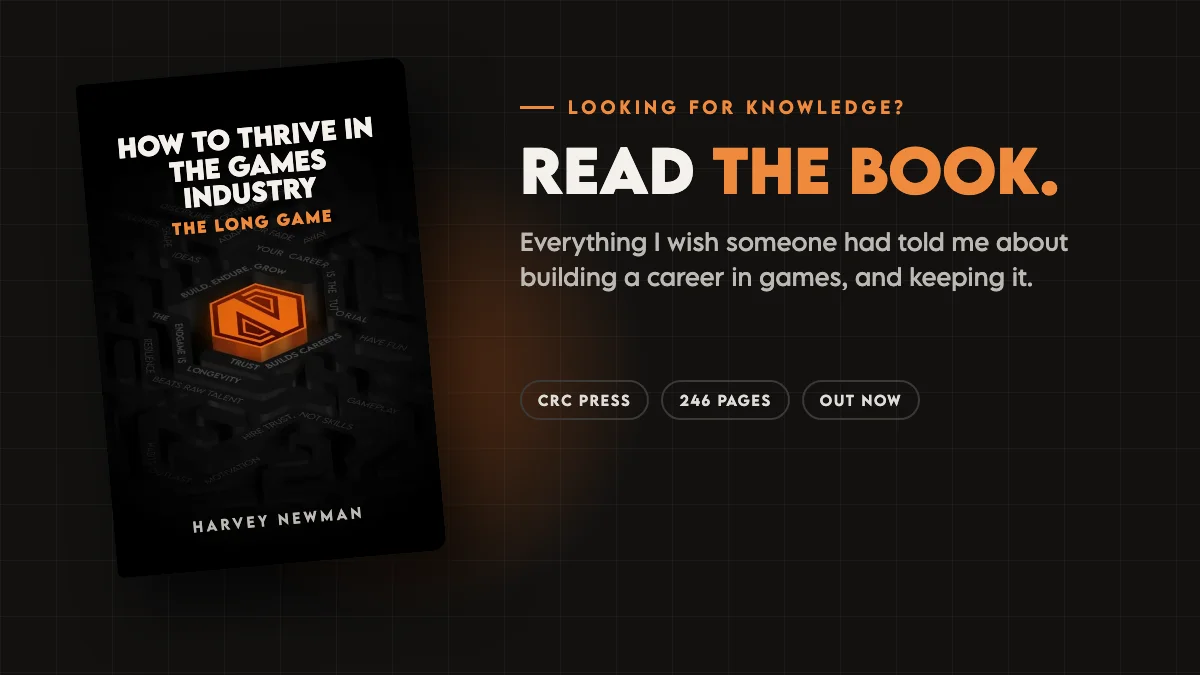 Looking for knowledge?How to Thrive in the Games Industry: The Long GameMy book on building a career in games and keeping it. CRC Press, 246 pages.Get the book →
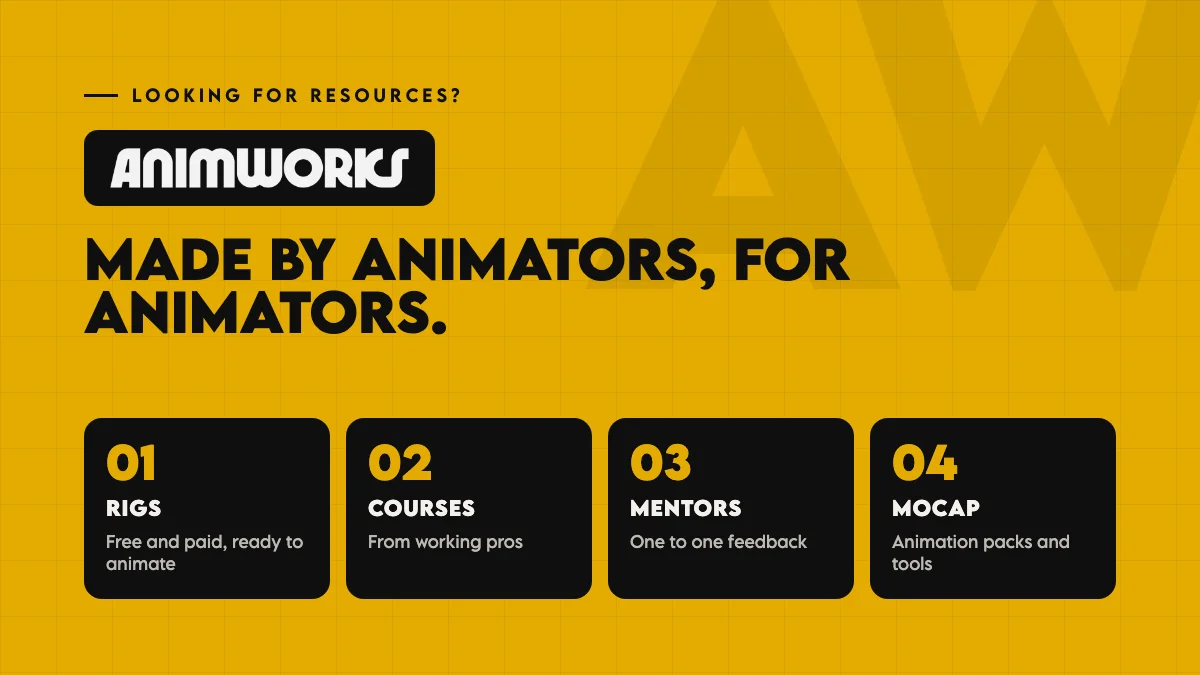 Looking for resources?Rigs, courses and mentors on AnimworksFree and paid rigs, courses from working pros, one to one mentoring and mocap packs.Visit anim.works →
 Harvey Newman: How My Cape Verdean Roots Shaped My Career19 Jun 2026
 Game Developer Skills the Industry Wants Now: How to Future-Proof Your Career13 Feb 2026
 5 Game Development Career Myths That Cost Me 20 Years29 May 2026
 The Junior Game Developer Time Bomb, and the Back Doors Still Open17 Jul 2026