
Industry7 min read21 min video
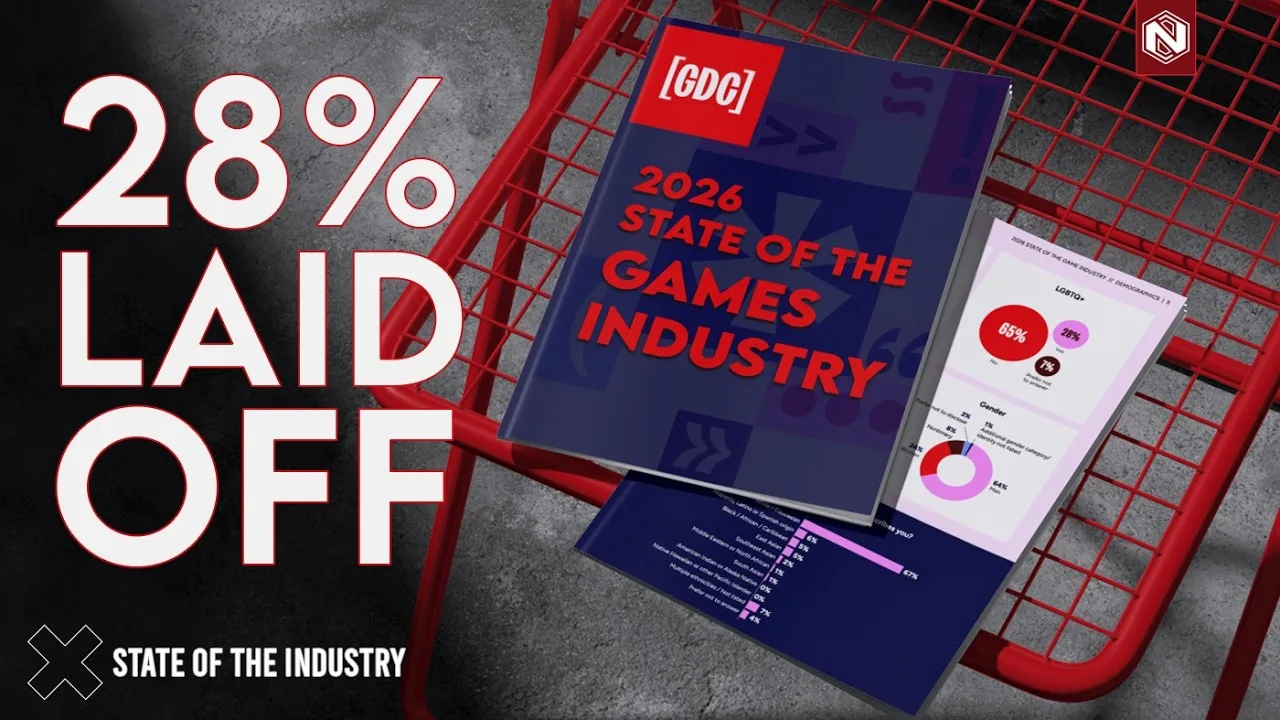
28% laid off in two years. 33% in the US.
GDC 2026 State of the Game Industry: The Truth About Layoffs
Key takeaways
- In GDC's 2026 State of the Game Industry survey of more than 2,300 professionals, 28% were laid off in the past two years, rising to 33% in the US.
- Two-thirds of respondents at AAA studios said their company had layoffs, against one-third at indie studios.
- 52% think generative AI is hurting the industry, but only 36% use it at work, and most of them use it for research and brainstorming, not making art.
- 74% of students are worried about their prospects. Harvey's advice: make your reel as good as a mid-level animator's before you apply for a junior job.
- Mid-levels should build a personal brand and diversify their income. Students should specialise, ship games, post their work and network.
Every year GDC puts out its State of the Game Industry report, and I read it from beginning to end. It’s the closest thing we have to finding out what’s happening in our industry, and only then can you work out where you’re going.
The GDC 2026 State of the Game Industry report came out in January. More than 2,300 game industry professionals answered it. I’ve got some strong thoughts on what it says about games industry layoffs, AAA, AI and students, so here they are, from 20-plus years in the industry.
You can read GDC’s summary of the report yourself. Every figure below comes from it unless I say otherwise.
Games industry layoffs: what the GDC 2026 report found
Let’s start with the big numbers.
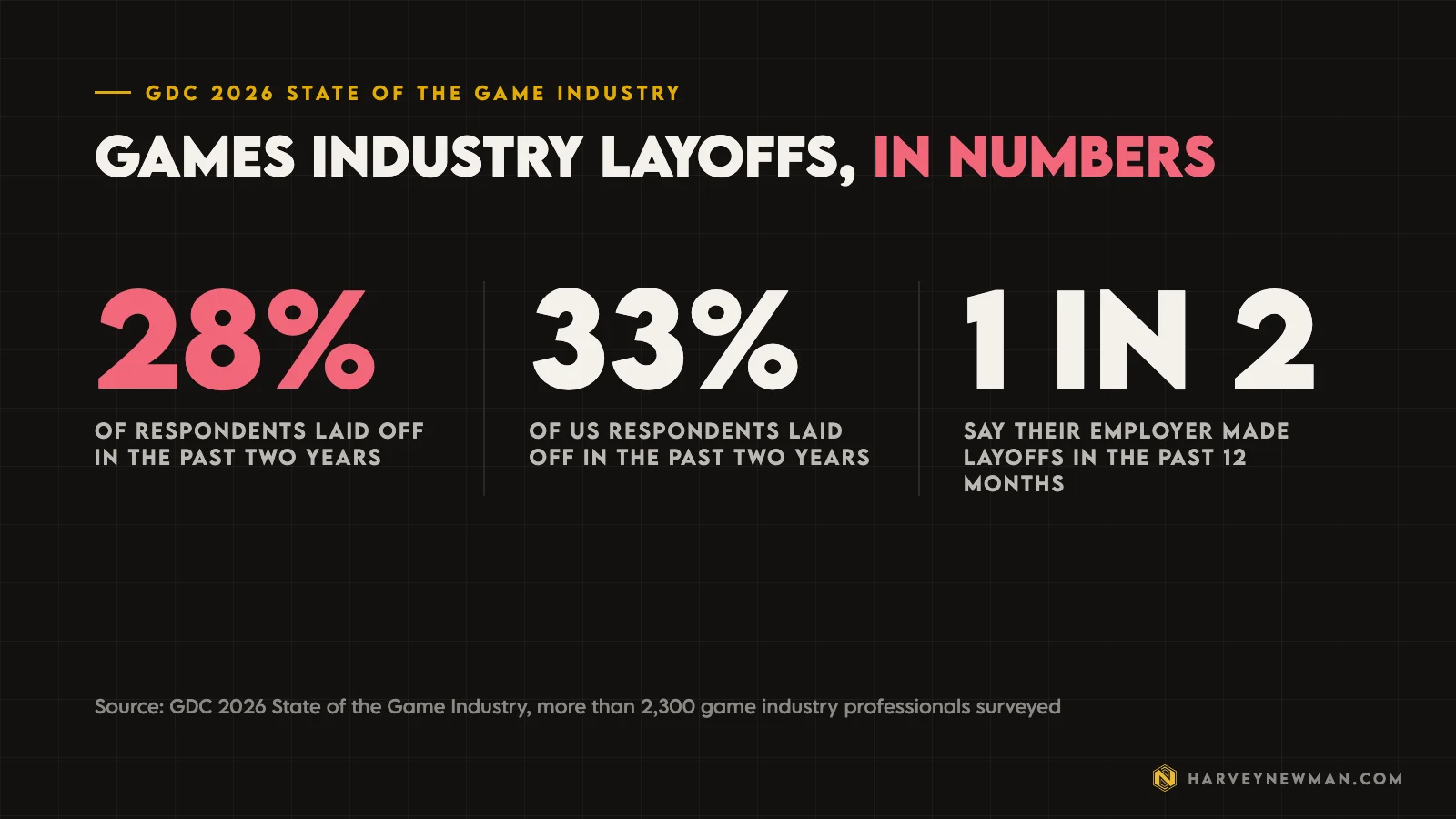
- 28% of respondents were laid off in the past two years.
- In the US, that rises to 33%.
- Half said their current or most recent employer made layoffs in the past 12 months.
And it hasn’t stopped since the survey. In March, Epic laid off more than 1,000 people, about a fifth of the company, and Ubisoft has been through big rounds of cuts as well.
When people outside the industry see these numbers, they just see numbers. As a fellow game developer, I see mortgages and families. I see people who moved away from home for their dream job and then had to move back with that dream shattered.
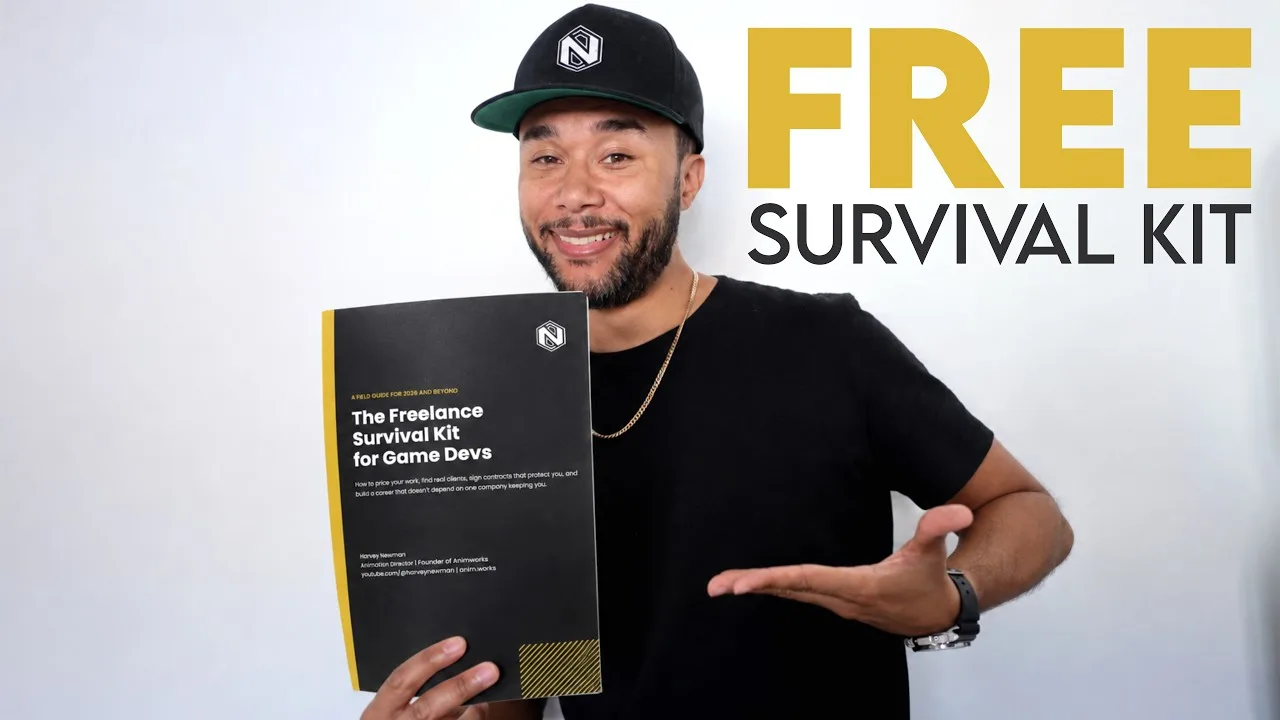
Unfortunately, I think we’ll see more layoffs, because the industry is changing at such a rapid pace, especially in AAA. I think we’re heading somewhere new and better, but it’ll come at a cost. If you’ve been laid off, I feel for you. Gather your work and put it out there. Lean on your network, the people who still have jobs and might be able to give you one. Keep working on your skills with good assets so you have the best work possible. I wrote a survival kit for exactly this in where the game dev jobs went.
Is AAA game development in crisis?
Here’s the number that stood out for AAA.
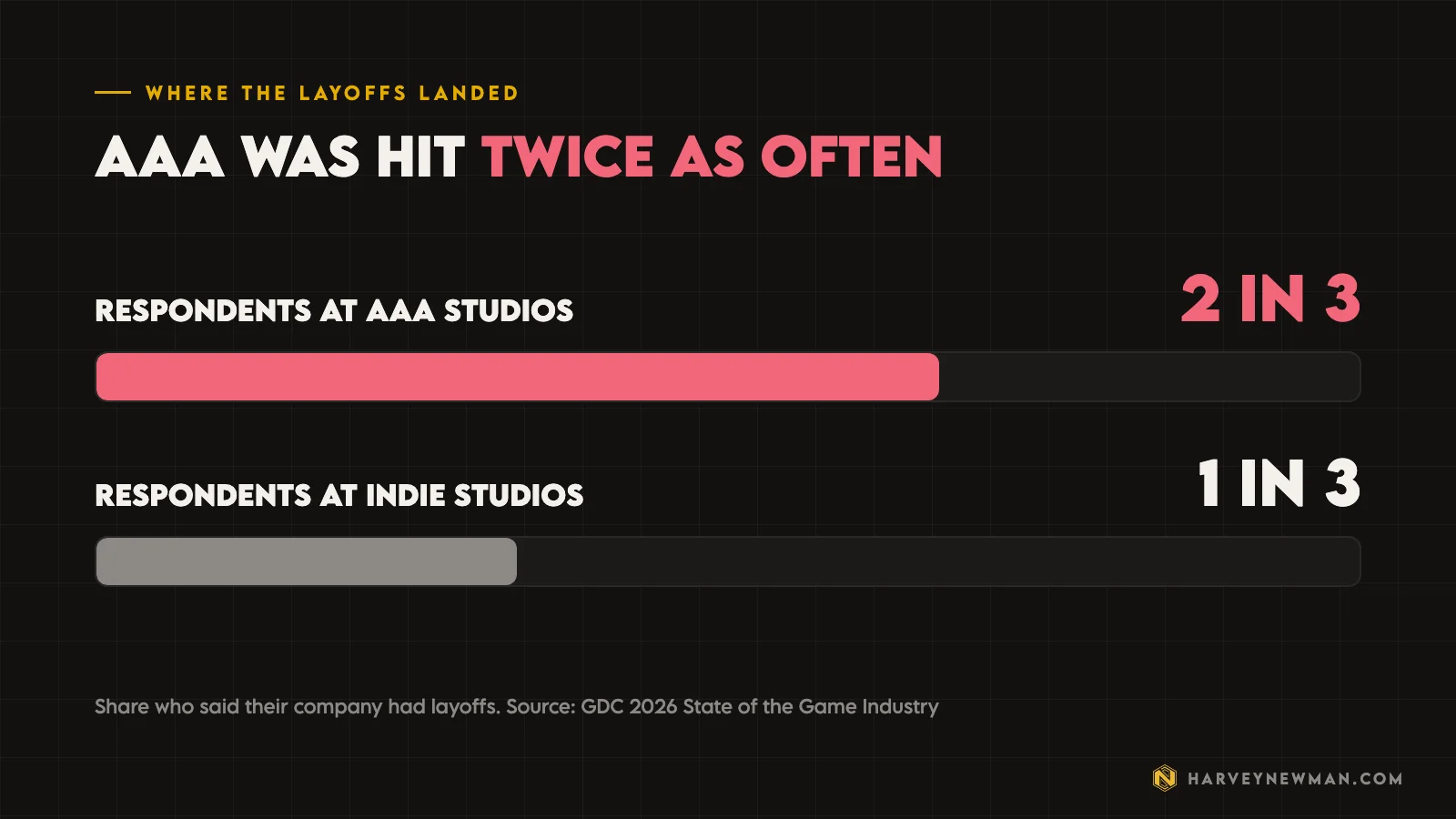
Two-thirds of respondents at AAA studios said their company had layoffs. At indie studios it was one-third.
So we need to talk about the AAA dream that most of us have had for years. I’m not saying don’t pursue AAA. AAA still makes great games, and it will always be here. But if it’s your goal, I don’t think it should be your only goal.
Why co-dev studios are rising
At Rekindled, our co-dev studio, we work with lots of companies. What I’ve found there, and it boggles my mind, is that many of the new animators coming through don’t want to work in AAA. They want to work at co-dev studios like ours, or at small indie studios.
When I ask why, it’s flexibility. Creative flexibility, and flexibility in the job itself. People are realising that if you work for one company and anything happens to it, however big it is, you’re in a vulnerable position. At a co-dev studio there are multiple projects running at once, so if one drops or closes, there’s a good chance you move to another.
My take on where this goes: the big AAA studios, with 100 or 200-plus people, will keep the essential work in-house and co-dev the rest of the project. Co-dev used to be what you did when you didn’t have enough muscle. Now there’s a sense of respect for it, with big studios and co-dev studios helping each other out.
Generative AI in games: is the fear bigger than the reality?
A couple of years ago, when I started talking about AI on the channel, everyone thought it would take our jobs. I felt like the meme of the guy sitting in the burning room saying everything’s fine, even though I was scared too.
I think things are changing. I believe, and I hope you do too, that AI isn’t going to take your job as an animator. This report makes that even clearer to me.
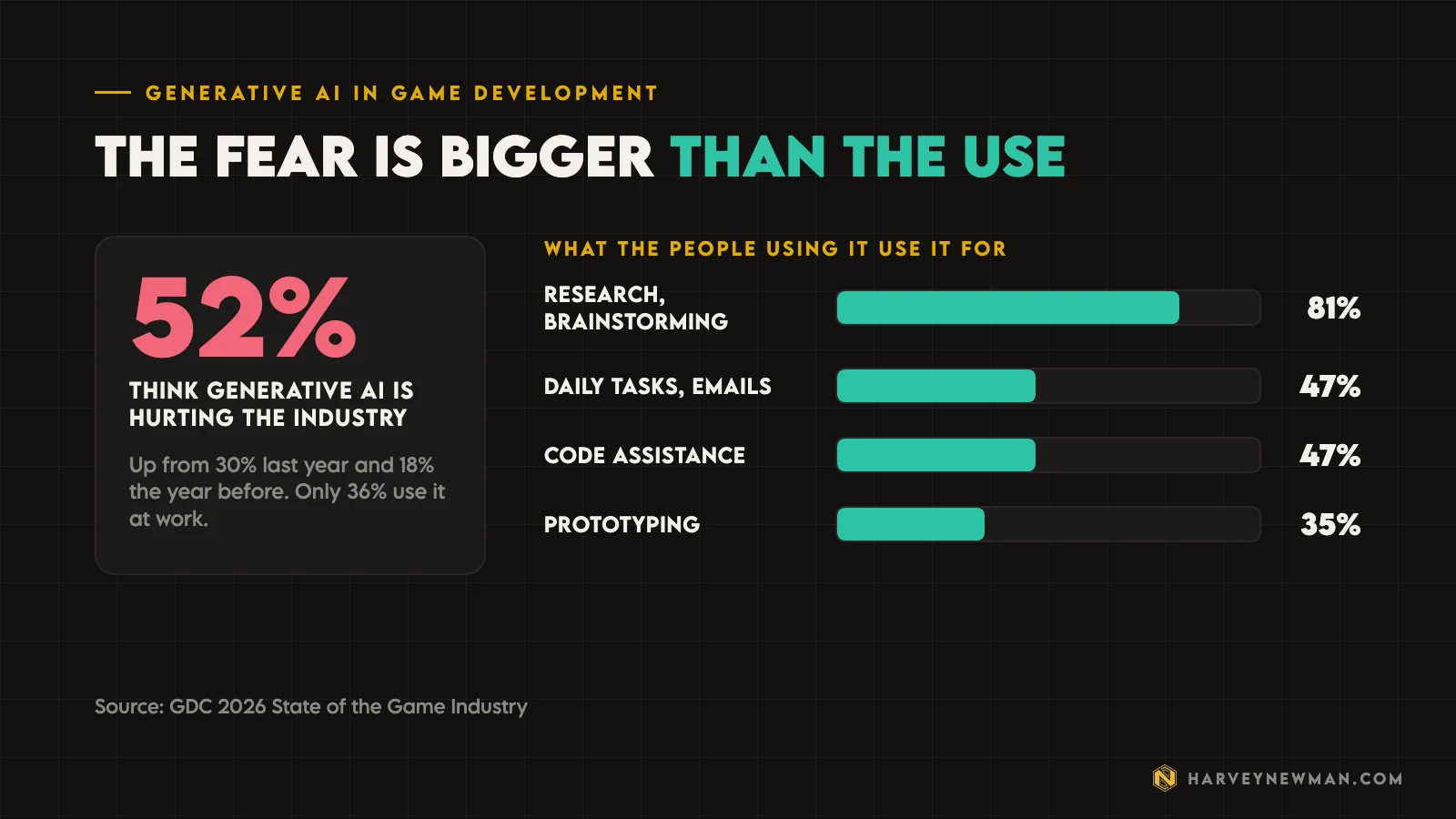
52% of professionals think generative AI is having a negative impact on the industry, up from 30% the year before and 18% the year before that. I agree with them, especially on the creative side.
But only 36% use generative AI tools at work. Of those who do:
- 81% use it for research or brainstorming. That’s all I use it for too, and most people around me are the same.
- 47% use it for daily tasks like writing emails, and 47% for code assistance.
- 35% use it for prototyping.
Asset generation is the part that matters most for us, because that’s the animation and art side, the bit we fear AI will take. In the full report it sits at 19%, and player-facing features at 5%.
The fear is much, much bigger than the reality of things.
I hope those numbers give you a little peace of mind. I went deeper on this in will AI replace animators.
Why students are worried about the games industry
If you’re a student who wants to be an animator, an artist or a designer, this report sees you.
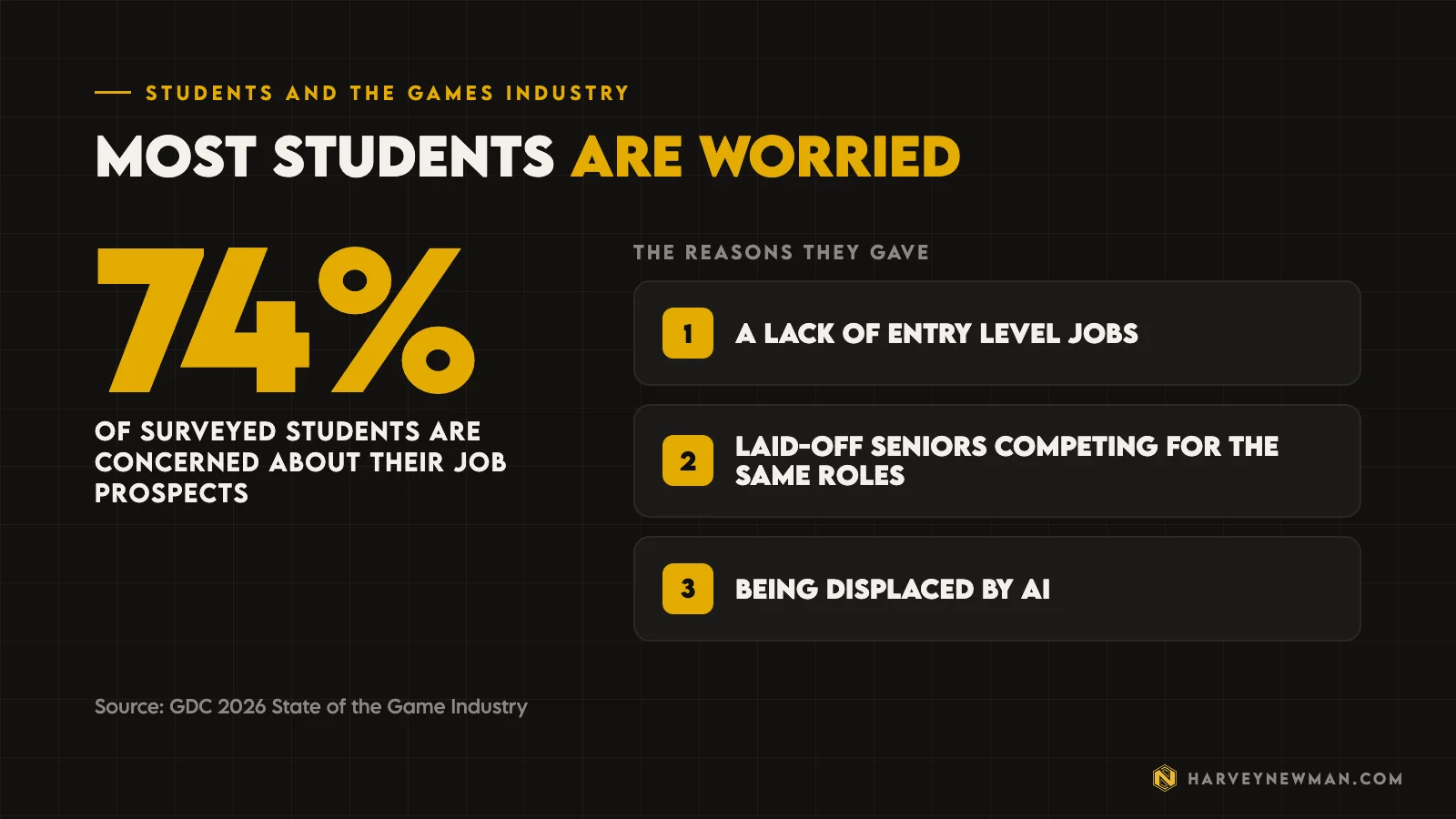
74% of students are concerned about their future job prospects. The reasons: a lack of entry level jobs, laid-off seniors competing for the same jobs, and being displaced by AI.
That must be disheartening. You see job listings asking for three years’ experience, and I felt that pain when I started. How do you get experience if nobody gives you a job? And I know for a fact that plenty of seniors are willing to drop to a mid-level role just to get paid and cover the rent.
How good does your showreel need to be?
Here’s my opinion, based on all this.
Your showreel needs to be as good as a mid-level's just to get into a junior job.
Harvey Newman
That’s how harsh it is. I won’t pretend everything is rosy. Look at film: if you apply to Disney, they expect your reel to be close to mid-level quality, ready to sit down and go. Aaron McGriff covers exactly this in his Feature Demo Reel workshop on Animworks, and I cover the games side in Crafting a Showreel Game Studios Will Love.
From the students I talk to, there’s a feeling that you only need to be good enough to pass your course, and then everything will be fine. It won’t. If you do just enough to impress your school, professionals will think it’s all right. Nothing special. You want to impress the professionals.
You might feel like a big fish in a small pond. The reality is, you’re a small fish in a massive pond.
The more you internalise that, the harder you’ll work to reach mid-level.
The path is harder now, but it isn’t closed. As the industry gets more specialised, with genres, combat styles, first person, third person, horror, you can become a specialist in one thing.
And being online is no longer optional. One of the first things a studio does when you apply is Google your name and your work, to get a feel for what kind of person you are before you even reach an interview. You need a website, a social media presence, and you need to post your work as often as you can.
What should game developers do now?
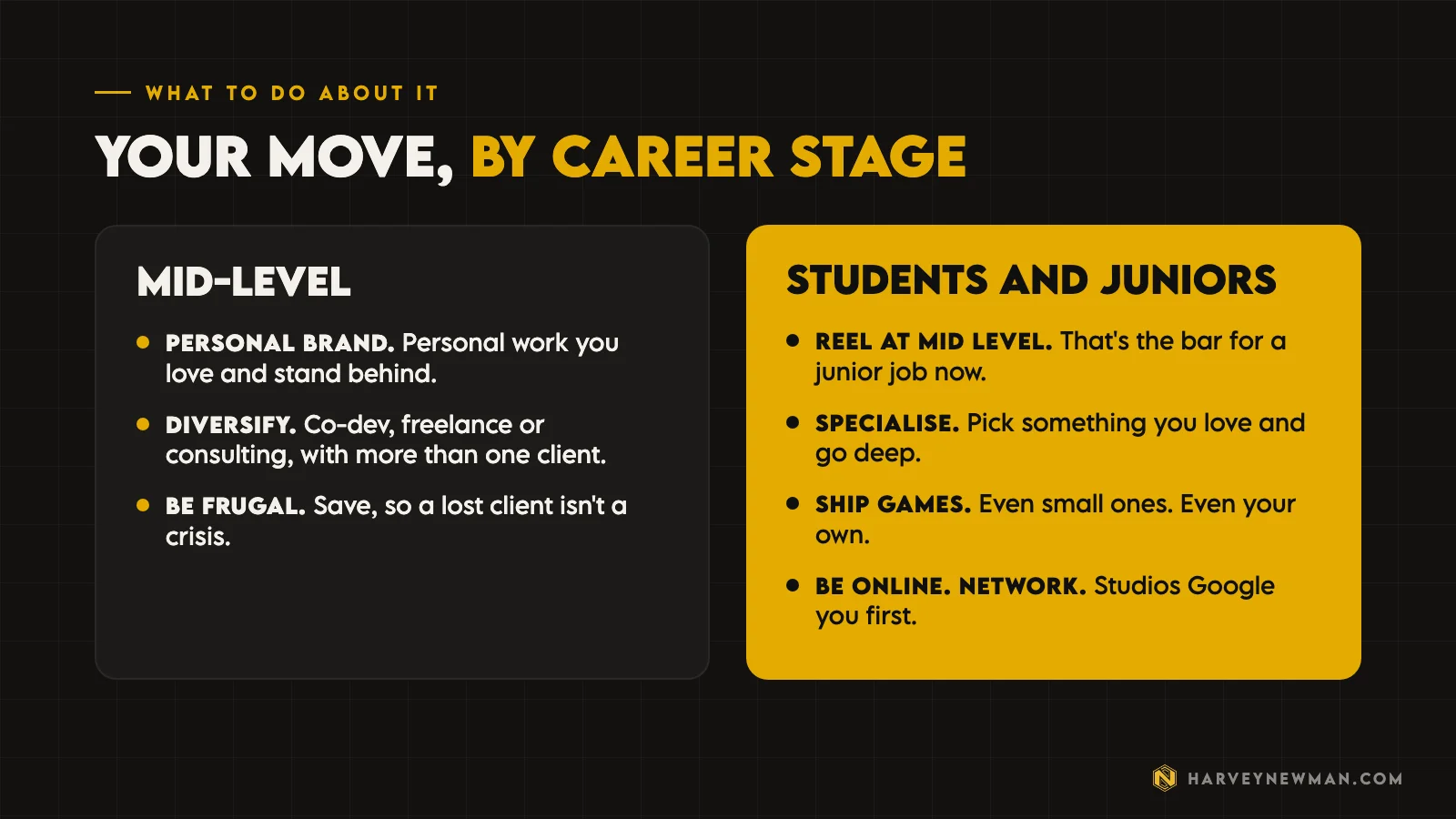
- Build a personal brandFor mid-levels: personal work you love and stand behind. People can see when an artist loves what they make.
- Diversify your incomeJoin a co-dev studio, or freelance and consult with more than one client, so one lost client isn't the end.
- Ship gamesFor students and juniors: small studio games or your own. It shows you're doing the reps.
- NetworkGo to events, talk to people, let them get to know you. People want to work with good people.
On diversifying: people are spooked, and they want stability. As long as you’re frugal, save and know how to handle your finances, at least it’s in your hands. If something goes wrong, it was maybe something you did, not the whim of a AAA studio. I wrote more about that in how to adapt as a freelance animator or game developer.
On networking: as a student, your network might be zero, or ten people. Sometimes you meet someone from a studio looking for a good junior, they like your personality, and they decide to teach you how it’s done on the job.
A closing reflection
I feel for everybody going through this. For years we felt this industry was guaranteed, going up and up. I used to think games were the best entertainment out there, that TV and film would die before games did. Five or ten years ago things felt stable, like there was no end to it. Financially and in terms of jobs, that’s not the truth, and that’s heartbreaking.
I think the industry needs this in order to become better, to become more resilient.
Harvey Newman
We’ll find a path forward, and I think it’s already forming.
Look after yourself. Go and see somebody if you can, so you don’t get depressed or mentally exhausted. Vent if you need to. But push back on the negativity, because if you bring it into an interview or a conversation at an event, the other person only sees that, because they don’t know you yet. I’ve been there. Some weeks, keeping a positive attitude while everything at work is burning is hard. Showing your true personality will take you a long way.
Which number in the report hit you hardest? Tell me in the comments on the video, and if you spot something important I missed, share it there for everyone else.
The video
Watch the full breakdown
Questions people ask
What does the GDC 2026 State of the Game Industry report say about layoffs?
28% of respondents said they had been laid off in the past two years, and 33% of US respondents. Half said their current or most recent employer made layoffs in the past 12 months, and two-thirds of respondents at AAA studios reported layoffs at their company.
How many game developers use generative AI?
According to GDC's 2026 report, 36% of game industry professionals use generative AI tools at work. Of those, 81% use them for research or brainstorming, 47% for daily tasks like emails, 47% for code assistance and 35% for prototyping.
Do game developers think AI is bad for the industry?
52% of respondents to GDC's 2026 survey think generative AI is having a negative impact on the games industry, up from 30% the year before and 18% the year before that.
Why are students worried about getting into the games industry?
74% of students in GDC's 2026 survey are concerned about their job prospects. They cite a lack of entry level jobs, laid-off senior developers competing for the same roles, and displacement by AI.
How good does a showreel need to be to get a junior job?
Harvey's advice is to make it as good as a mid-level animator's before you apply for a junior role. Studios like Disney already expect film applicants to be close to mid-level quality and ready to start.
And remember,
there are no shortcuts for animation.
 Stay well, stay safe,Harvey NewmanBook a free call →
 Looking for knowledge?How to Thrive in the Games Industry: The Long GameMy book on building a career in games and keeping it. CRC Press, 246 pages.Get the book →
 Looking for resources?Rigs, courses and mentors on AnimworksFree and paid rigs, courses from working pros, one to one mentoring and mocap packs.Visit anim.works →
 Where the Game Dev Jobs Went, and How to Get Them18 Sept 2026
 The Games Industry Is Broken: 90% Is Them, 10% Is Us10 Jul 2026
 The Reality of Being an Animator in 2026: How an Animation Career Has Changed16 Oct 2026
 Will AI Replace Animators? No, But Ignoring It Will Cost You30 Jan 2026